
Transmission fluid is vital for both automatic and manual transmissions. In automatics, it transfers power, lubricates, cools, and enables smooth shifting. In manuals, it mainly lubricates gears and bearings, reducing wear.
Regularly changing transmission fluid helps maintain your transmission. Over time, contaminated fluid loses its protective abilities and can lead to poor shifting or transmission damage.
If you notice rough or delayed shifting, slipping gears, burning smells, or dark fluid, it may be time to change the fluid. Most manufacturers advise changing it every 30,000 to 60,000 miles. Regular maintenance prevents expensive repairs.
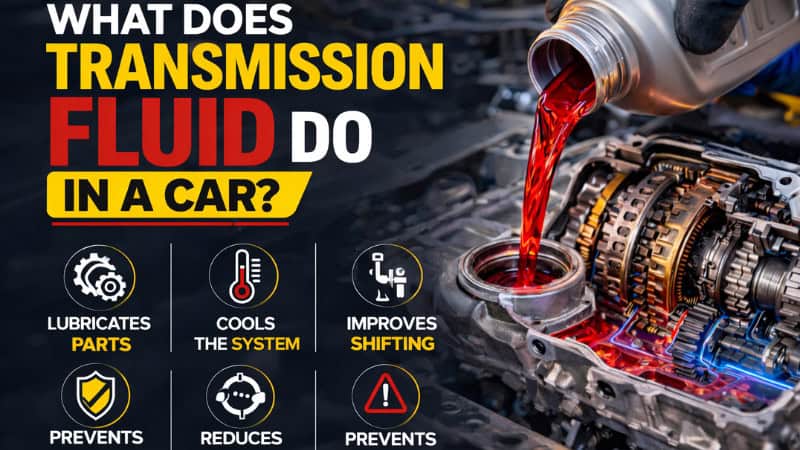
What Does Transmission Fluid Do in a Car?
Transmission fluid plays a vital role in keeping your vehicle’s transmission system running smoothly and efficiently. One of its main functions is lubricating transmission gears and internal components, reducing friction between moving parts, and helping prevent excessive heat buildup. Proper lubrication ensures that gears, bearings, and clutch packs operate without unnecessary wear.
Another important role of transmission fluid is to cool the transmission system. As the transmission operates, it generates significant heat. The fluid absorbs and dissipates this heat, preventing overheating that could damage internal components.
Transmission fluid also helps with smooth gear shifting, especially in automatic transmissions, where it acts as a hydraulic fluid to control gear engagement. Additionally, it prevents internal wear and damage by keeping components properly lubricated and removing tiny metal particles and contaminants that could harm the transmission over time.
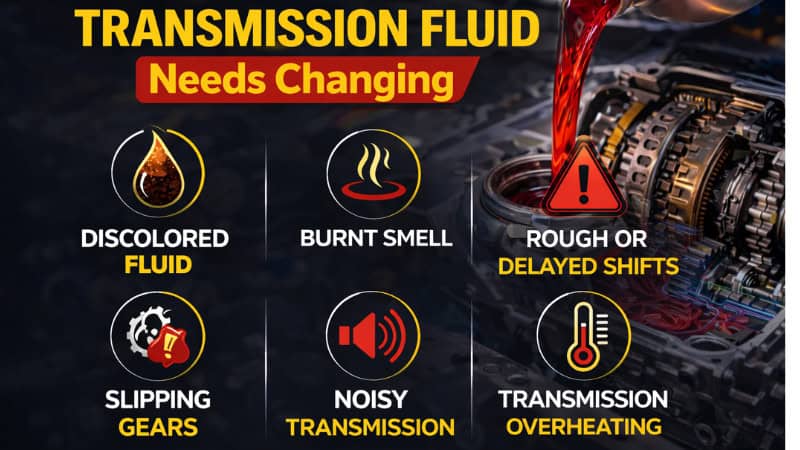
Signs Your Transmission Fluid Needs Changing
Transmission fluid gradually breaks down due to heat, friction, and contamination. When the fluid loses its effectiveness, the transmission may start showing warning signs that it needs service. Recognizing these symptoms early can help prevent serious and costly transmission damage.
Delayed or Rough Gear Shifting
One of the most common signs of bad transmission fluid is delayed or rough gear changes. If your vehicle hesitates when shifting or shifts harshly, the fluid may be old or low, and it may no longer be providing proper hydraulic pressure.
Burning Smell from Transmission
A burning smell can indicate overheated or degraded transmission fluid. When the fluid breaks down, it loses its ability to cool and protect the transmission, leading to overheating.
Transmission Slipping
If the transmission suddenly shifts out of gear or slips out of gear, worn-out transmission fluid may be the cause.
Dark or Dirty Transmission Fluid
Healthy transmission fluid is usually bright red and clean. If it appears dark, brown, or dirty, it likely needs to be replaced.
Strange Noises While Driving
Grinding, whining, or humming noises while driving may indicate poor lubrication caused by contaminated transmission fluid.
How Often Should You Change Transmission Fluid?
Changing transmission fluid at the proper interval is essential for maintaining smooth shifting and protecting internal transmission components. The recommended service schedule can vary depending on the type of transmission, driving conditions, and manufacturer guidelines.
Automatic Transmission Service Intervals
Most manufacturers recommend changing automatic transmission fluid every 30,000 to 60,000 miles. Vehicles used for towing, heavy loads, or frequent stop-and-go driving may require more frequent service to prevent overheating and fluid breakdown.
Manual Transmission Intervals
Manual transmissions typically require fluid changes less often. In most cases, the fluid should be replaced every 60,000 to 100,000 miles, although checking the owner’s manual for specific recommendations is always best.
Transmission Fluid Change vs Transmission Flush
A transmission fluid change drains old fluid from the pan and replaces it with new fluid. A transmission flush uses specialized equipment to completely remove old fluid from the entire system and replace it with fresh fluid.
Learn More: Transmission Fluid Flush vs. Change
Tools and Materials Needed
Before starting a transmission fluid change, it’s important to gather the right tools and materials. Having everything ready will make the process easier, safer, and more efficient. Using the right equipment also helps prevent spills, ensures proper fluid replacement, and lets you complete the job like a professional mechanic.
Tools and Materials:
- Jack and Jack stand.
- Drain pan
- Socket wrench set
- Funnel
- New transmission fluid (OEM recommended)
- New transmission filter (if applicable)
- Gloves and safety glasses
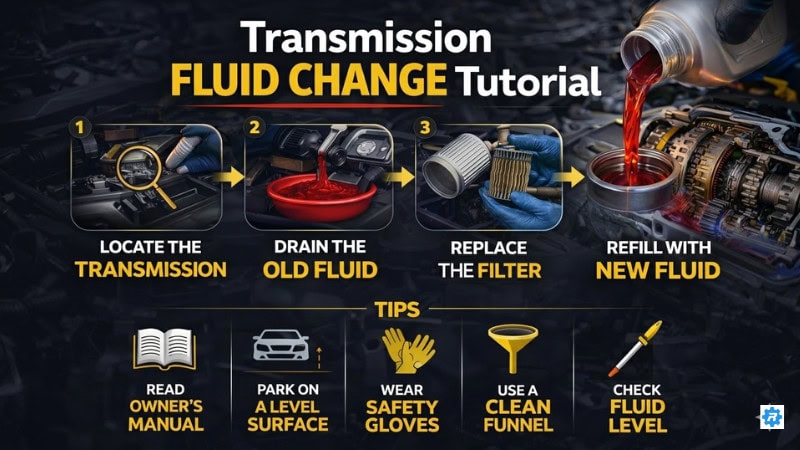
Transmission Fluid Change Tutorial (Step-by-Step)
Changing transmission fluid is a straightforward maintenance task that can help extend your transmission’s life and improve shifting performance. By following the correct steps and using the proper tools, DIY mechanics can safely replace old transmission fluid and keep the transmission system running smoothly. This tutorial will help you learn how to change transmission fluid at home, making it accessible even for beginners.
Step 1 – Warm Up the Engine
Start the engine and let it run for a few minutes before beginning the job. Warm transmission fluid drains more easily, allowing more of the old fluid to flow out of the system.
Step 2 – Lift the Vehicle Safely
Park the vehicle on a flat, stable surface and use a jack to lift it. Secure the vehicle with jack stands to ensure safety while working underneath the car.
Step 3 – Locate the Transmission Drain Plug
Find thFind the transmission drain plug, which is usually at the bottom of the transmission. If you are unsure, check your car’s owner’s manual. 4 – Drain the Old Transmission Fluid.
Place a drain pan underneath the transmission drain plug. Carefully remove the plug and allow the old transmission fluid to drain completely.
Step 5 – Remove Transmission Pan (If Needed)
Some vehicles require removing the transmission pan to access the filter. If you’re wondering, “Can I change my transmission fluid without changing the filter?”—it’s recommended to replace the transmission filter if possible, but some fluid changes can be done without replacing the filter. Always clean the pan to remove any debris or metal particles.
Step 6 – Reinstall Pan and Drain Plug
After cAfter cleaning, put the transmission pan and drain plug back in place. Tighten the bolts according to your car maker’s instructions for the desired torque.7 – Add New Transmission Fluid
Use a funnel through the transmission dipstick tube to add the recommended type of new transmission fluid. Always use the OEM-recommended fluid for your vehicle.
Step 8 – Check Fluid Level
Start the engine and cycle through all the gears while the vehicle is stationary. Finally, check the transmission fluid level with the dipstick and add more fluid if necessary to reach the correct level.
Common Mistakes to Avoid
When changing transmission fluid, avoiding common mistakes is important to prevent damage to the transmission system. Even a small error can lead to poor shifting performance or costly repairs.
- Using the wrong transmission fluid type – Always use the manufacturer-recommended fluid. Using the wrong type can cause poor lubrication and transmission problems.
- Overfilling the transmission – adding too much fluid can cause pressure buildup and lead to leaks or shifting issues.
- Not replacing the transmission filter – A clogged filter can restrict fluid flow and reduce transmission efficiency.
- Ignoring fluid leaks – Small leaks can quickly lead to low fluid levels, overheating, and transmission damage if left unrepaired.
Transmission Fluid Change Cost
The cost of changing transmission fluid depends on whether you do it yourself or have a professional mechanic do it.
DIY Cost Estimate
If you change the fluid yourself, the typical cost ranges from $40 to $120, depending on the type and quantity of transmission fluid required.
Mechanic Shop Cost
Having a professional mechanic perform the service usually costs between $150 and $300, depending on the vehicle model and labor charges.
Factors Affecting Price
Several factors can influence the total cost, including the type of transmission, amount of fluid required, transmission filter replacement, labor rates, and the type of transmission fluid used. Regular maintenance can help avoid expensive transmission repairs in the future.
Pro Tips From Professional Mechanics
Professional mechanics recommend following a few simple practices to keep your transmission in excellent condition. These tips can help extend transmission life and prevent costly repairs.
- Always check the manufacturer’s fluid specs – different vehicles require specific transmission fluids, so always follow the recommendations in your owner’s manual.
- Use OEM-approved transmission fluid – Using the correct fluid ensures proper lubrication, cooling, and smooth gear shifting.
- Check fluid condition regularly – Inspect the fluid color and level periodically to detect contamination or low fluid early.
- Service transmission every 30k–60k miles – Regular maintenance helps prevent wear, overheating, and transmission failure.
Frequently Asked Questions (FAQs)
1. How often should transmission fluid be changed?
Most manufacturers recommend changing transmission fluid every 30,000 to 60,000 miles for automatic transmissions. Manual transmissions may last longer, typically 60,000 to 100,000 miles, depending on driving conditions and vehicle design.
2. What happens if you don’t change transmission fluid?
Old transmission fluid loses its lubricating and cooling properties. This can cause rough shifting, overheating, transmission slipping, and eventually severe transmission damage.
3. Can I change transmission fluid myself?
Yes, many DIY mechanics can change transmission fluid at home with basic tools such as a jack, a drain pan, a socket wrench, and a funnel. However, some modern vehicles require special procedures or tools.
4. What color should transmission fluid be?
Healthy transmission fluid is typically bright red and clear. If the fluid appears dark brown, black, or smells burnt, it usually indicates that the fluid needs to be replaced.
5. What is the difference between a transmission fluid change and a flush?
A fluid change drains and replaces some of the old fluid from the transmission pan, while a transmission flush removes nearly all old fluid from the entire system using specialized equipment.
6. How much does a transmission fluid change cost?
A DIY transmission fluid change usually costs $40–$120, depending on the type of fluid. A professional service at a repair shop typically costs $150–$300.
Final Thoughts – Where to Change Transmission Fluid?
Proper transmission fluid maintenance plays a key role in keeping your vehicle running smoothly and reliably. Whether you choose to change transmission fluid at home or visit a professional service center, regular changes help protect internal transmission components and maintain smooth gear shifts. If you’re looking for a Ford transmission fluid change tutorial or information on where to change transmission fluid, always consult your owner’s manual and consider your comfort level with DIY repairs. Performing a DIY transmission fluid change is a money-saving option, but professional shops are available if you prefer expert service. No matter your approach, following an automatic transmission fluid change tutorial or a guide on how to change transmission fluid manual will ensure your transmission remains reliable for years to come.
