
Spark plugs play a crucial role in your engine’s performance. These small but powerful components ignite the air-fuel mixture inside the combustion chamber, allowing your engine to start and run smoothly. When spark plugs are working properly, your vehicle delivers better fuel efficiency, smoother acceleration, and reliable engine performance. However, over time, spark plugs wear out due to heat, carbon buildup, and normal engine operation.
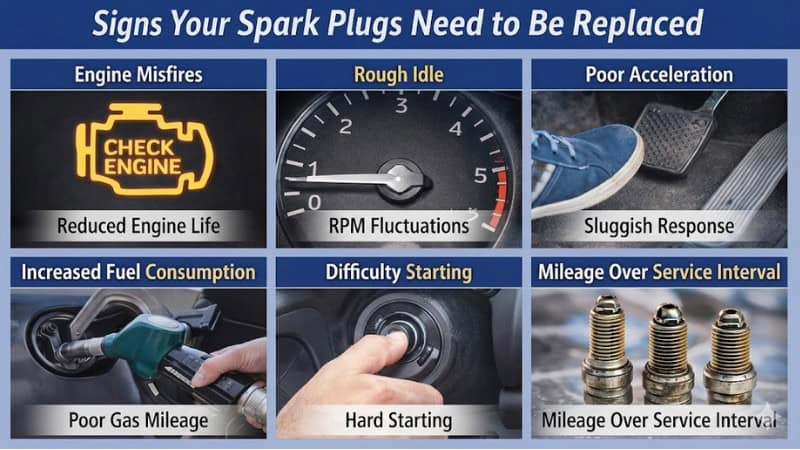
Failing spark plugs can cause engine misfires, rough idling, poor fuel economy, slow acceleration, hard starts, or a check engine light. Ignoring these symptoms can reduce engine performance and increase fuel use.
The good news is that replacing spark plugs is a simple, common task. This guide shows you the tools, steps, and key tips to avoid mistakes. Even DIY beginners can tackle this with basic tools and a bit of patience.
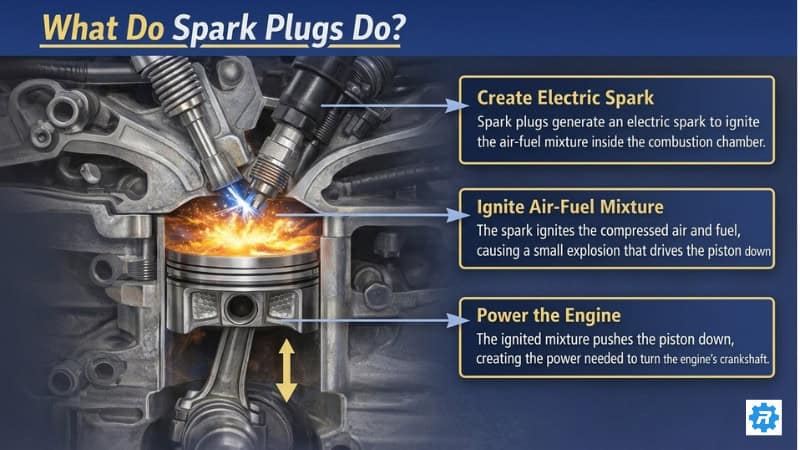
What Do Spark Plugs Do?
Spark plugs generate a spark in each cylinder, igniting the air-fuel mix to power your car.
This process happens thousands of times per minute. Spark plugs endure extreme heat and pressure. In good condition, they make sure the air-fuel mixture burns efficiently and consistently.
Healthy spark plugs help maintain fuel economy, strong engine power, and smooth starts. Worn or fouled plugs reduce combustion efficiency, causing rough running and lower performance.
Signs Your Spark Plugs Need to Be Replaced
Spark plugs wear out from continuous heat, pressure, and carbon buildup. As they age, their spark weakens, affecting engine performance. Recognize early signs to prevent bigger issues and keep your car running well.
- Engine misfires are a common sign of worn spark plugs, causing hesitation and shaking.
- A rough idle or hard starting can mean faulty spark plugs, especially in cold weather.
- Failing spark plugs reduce fuel economy and power, resulting in slow acceleration.
- The check engine light may turn on when a plug fails. Many cars detect misfires automatically.
- Other issues, like bad ignition coils or fuel problems, can mimic spark plug issues. Replace plugs as recommended to avoid problems.
How Often Should You Change Spark Plugs?
Spark plug replacement intervals vary depending on the type of spark plug and the engine design. Older vehicles that use copper spark plugs usually require replacement more frequently, typically every 20,000 to 30,000 miles, because copper plugs wear out faster under heat and electrical stress.
Newer cars use platinum or iridium plugs, usually lasting 60,000–100,000 miles under normal conditions.
However, the exact replacement interval can vary by vehicle make and model. Some high-performance engines may require more frequent inspections, while others are designed for extended maintenance intervals. For the most accurate information, it’s always best to check your vehicle’s owner’s manual or the manufacturer’s maintenance schedule.
Change spark plugs if you notice misfires, rough idle, poor mileage, or hard starting. Timely replacements keep your engine running well.
Tools and Materials You Need
Having the right tools makes spark plug replacement quick and safe. Use care to avoid thread damage. Most people can do it with basic tools.
Tools & Materials List:
- New spark plugs (correct type for your vehicle)
- Ratchet wrench
- Spark plug socket
- Extension bar
- Torque wrench
- Spark plug gap tool
- Dielectric grease
- Compressed air or a clean brush (to remove dirt around plugs)
- Anti-seize compound (if recommended by manufacturer)
- Gloves and safety glasses
Safety Tips Before You Start
Follow basic safety steps when changing spark plugs. Work on a cool engine and don’t rush to avoid damage or injury.
Safety Tips:
- Let the engine cool completely before removing spark plugs.
- Disconnect the negative battery terminal if needed.
- Work in a clean, well-lit area
- Use the correct spark plugs specified for your vehicle.
- Avoid dropping debris into the spark plug hole.
- Always thread spark plugs by hand first to prevent cross-threading
- Do not overtighten the spark plugs.
- Keep tools and loose clothing away from moving engine parts.
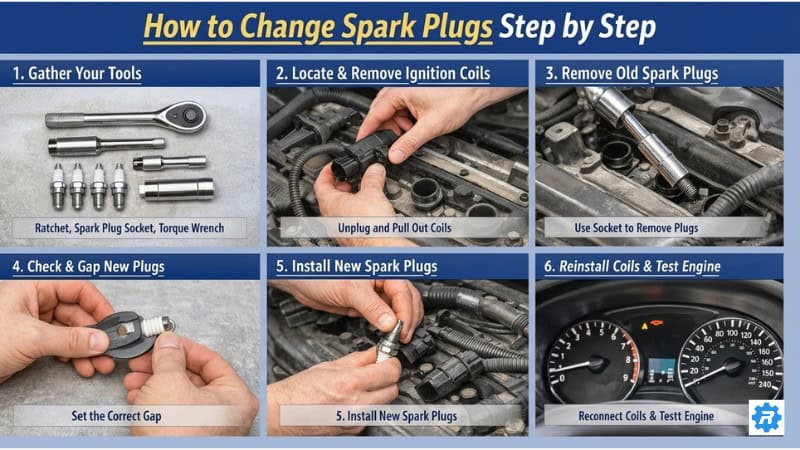
How to Change Spark Plugs Step by Step
To replace spark plugs, work carefully and replace one plug at a time, avoiding damage to the cylinder head threads. Follow these clear, step-by-step instructions mechanics use to safely change spark plugs.
Step 1: Park the Car and Let the Engine Cool
Park on a flat surface, turn off the car, and let the engine cool. Removing hot plugs can damage threads.
Step 2: Locate the Spark Plugs
Open the hood and find the spark plugs. They’re under ignition coils or plug wires; some engines need a cover removed first.
Step 3: Remove the Ignition Coil or Spark Plug Wires
Disconnect electrical connectors and remove ignition coil bolts for coil-on-plug systems. With plug wires, pull the boot, not the wire, to remove it.
Step 4: Clean Around the Spark Plug Area
Use compressed air or a clean brush to remove dirt before pulling the plug. This keeps debris out.
Step 5: Remove the Old Spark Plug
Insert the spark plug socket and extension into the plug well. Use a ratchet to turn counterclockwise. Remove the spark plug slowly and carefully.
Step 6: Inspect the Old Spark Plug
Take a moment to examine the old plug. Oil deposits, heavy carbon buildup, or worn electrodes can indicate other engine issues, such as oil leaks or poor combustion.
Step 7: Check the Gap on the New Spark Plug
Always check the new plug’s gap with a tool, even if labeled pre-gapped.
Step 8: Install the New Spark Plug by Hand
Thread the new spark plug into the cylinder head by hand to prevent cross-threading.
Step 9: Tighten the Spark Plug to the Correct Torque
Tighten the spark plug to the specified torque setting with a torque wrench. This provides a proper seal and heat transfer.
Step 10: Reinstall the Ignition Coil or Plug Wire
Apply dielectric grease if needed, reinstall the ignition coil or plug wire, and reconnect.
Step 11: Repeat for the Remaining Spark Plugs
Replace plugs one at a time to keep ignition parts organized.
Step 12: Start the Engine and Check Operation
Once all plugs are installed, start the engine and listen for a smooth idle. Make sure there are no warning lights and confirm the engine runs normally.
Common Mistakes to Avoid When Changing Spark Plugs
Changing spark plugs is a simple maintenance task, but small mistakes can lead to engine problems or expensive repairs. Many issues occur when plugs are installed incorrectly or the wrong parts are used. By avoiding these common mistakes, you can ensure the spark plugs work properly and your engine runs smoothly.
Common Mistakes:
- Using the wrong spark plug type for your vehicle
- Installing spark plugs in a hot engine can damage cylinder head threads.
- Dropping a spark plug before installation can damage the electrode.
- Not checking the spark plug gap before installation.
- Cross-threading the spark plug by not threading it by hand first
- Overtightening or undertightening the spark plugs
- Mixing up ignition coils or spark plug wires
- Ignoring oil or carbon deposits on old spark plugs, which may indicate engine issues
Can You Change Spark Plugs Yourself?
Yes, in many cases, you can change spark plugs yourself, especially if you have basic mechanical knowledge and the right tools. Spark plug replacement is considered one of the most common DIY car maintenance tasks. On many vehicles, the spark plugs are easy to access on top of the engine, making the job fairly simple for beginners.
However, the difficulty can vary depending on the engine design. For example, 4-cylinder engines usually provide easy access to the spark plugs, while some V6 or V8 engines may have plugs located deeper in the engine bay, making them harder to reach. In certain vehicles, components like the intake manifold may need to be removed to access the rear spark plugs.
If your engine has limited space, complex ignition systems, or you are unsure about the process, it may be safer to let a professional mechanic handle the replacement. But for many vehicles, with patience and careful steps, changing spark plugs can be a manageable, rewarding DIY job that saves on labor costs.
How Much Does It Cost to Replace Spark Plugs?
The cost of replacing spark plugs can vary depending on the type of spark plugs used and the engine design. If you choose to replace them yourself, the cost is usually quite affordable because you only need to pay for the spark plugs and possibly a few basic tools.
For most vehicles, spark plugs typically cost between $5 and $20 each, depending on whether they are copper, platinum, or iridium. A full set of spark plugs for a four-cylinder engine may cost $20 to $80, while larger engines with more cylinders will require more plugs.
If you have the work done at a repair shop, the total cost will include both parts and labor. Labor costs can range from $80 to $200 or more, depending on how difficult it is to access the spark plugs. Some engines require removing other components, which increases labor time.
In general, the total cost for professional spark plug replacement usually ranges from $120 to $350. Doing the job yourself can save a significant amount of money, especially if the spark plugs are easy to access.
Should You Replace Ignition Coils at the Same Time?
Ignition coils do not always need to be replaced when changing spark plugs, but it is a good idea to inspect them while you have everything removed. Ignition coils supply the high voltage needed to create the spark at the spark plug. If a coil becomes weak or fails, it can cause engine misfires, rough idle, and poor performance.
In many cases, ignition coils last much longer than spark plugs and only need replacement when they fail. However, if your vehicle already has high mileage, or if you notice cracked coil boots, oil contamination, or misfire symptoms, it may be worth replacing the faulty coil at the same time.
Many mechanics also check the coil boots and connectors during spark plug replacement. If the rubber boots are worn or brittle, replacing them can help prevent future ignition problems. Inspecting these components while the plugs are out can save time and avoid additional labor later.
Pro Tips Mechanics Use for Changing Spark Plugs
Professional mechanics follow a few simple practices to make spark plug replacement safer and more reliable. These small tips can help prevent engine damage, ensure proper ignition, and extend the life of the new spark plugs.
Pro Tips:
- Replace one spark plug at a time to avoid mixing up ignition coils or plug wires.
- Always use OEM-recommended or high-quality spark plugs for best performance.
- Thread the spark plug by hand first before using a ratchet.
- Use a torque wrench to tighten the spark plug to the correct specification.
- Inspect ignition coils and boots while the plugs are removed.
- Check for oil inside the spark plug tube, which may indicate a valve cover gasket leak.
- Avoid using anti-seize compound unless the manufacturer recommends it.
- Make sure the spark plug gap matches the factory specification.
Following these professional tips helps ensure the spark plugs are installed correctly and that your engine runs smoothly after the replacement.
Final Thoughts
Changing spark plugs is one of the most important and practical maintenance tasks you can perform to keep your engine running smoothly. Healthy spark plugs ensure proper combustion, improving fuel efficiency, engine power, and overall reliability. Ignoring worn spark plugs for too long can lead to misfires, poor performance, and increased fuel consumption.
By following the step-by-step process in this guide, even beginners can successfully replace spark plugs on many vehicles using basic tools. Taking your time, using the correct spark plugs, and tightening them to the proper specification will help prevent common mistakes. Regular spark plug maintenance not only keeps your engine performing at its best but can also help avoid costly repairs in the future.
Frequently Asked Questions(FAQs)
Can I change spark plugs without a torque wrench?
Yes, it is possible to change spark plugs without a torque wrench, but it is strongly recommended to use one. A torque wrench ensures the spark plug is tightened to the correct specification. If a plug is too loose, it may cause engine misfires or even blow out. If it is too tight, it can damage the cylinder head threads.
Do new spark plugs need to be gapped?
Many modern spark plugs come pre-gapped from the factory, but it is still a good idea to check the gap with a spark plug gap tool before installation. The correct gap ensures proper ignition and efficient combustion.
How long does it take to change spark plugs?
For most vehicles, replacing spark plugs takes 30 minutes to 2 hours, depending on engine design and accessibility. Four-cylinder engines are usually quicker, while V6 or V8 engines may take longer due to tighter spaces.
What happens if spark plugs are too loose or too tight?
If spark plugs are too loose, they may not seal properly, causing misfires, poor engine performance, or even blowing out of the cylinder head. If they are too tight, the engine head threads can be damaged, potentially requiring expensive repairs.
Should I replace all spark plugs at once?
Yes, it is usually best to replace all spark plugs at once. Replacing the full set helps maintain balanced engine performance and prevents future ignition problems.