
Strange car noises are your vehicle’s way of asking for help. Cars rarely break down without warning—they usually give you signs first. A squeal, knock, rattle, or grinding sound is often the earliest clue that something isn’t right under the hood or beneath the car.
The problem is that most drivers ignore these sounds until the issue worsens. What begins as a simple brake pad replacement can quickly turn into damaged rotors. A small ticking noise can develop into serious engine trouble. Understanding common car noises early can save you hundreds—or even thousands—of dollars in repairs.
In this comprehensive guide, we break down the most common car noises, what they mean, how serious they are, and practical fixes you can try. Whether you’re a DIY car owner or want to avoid expensive surprises, this article will help you diagnose strange car sounds with confidence and keep your vehicle running smoothly.
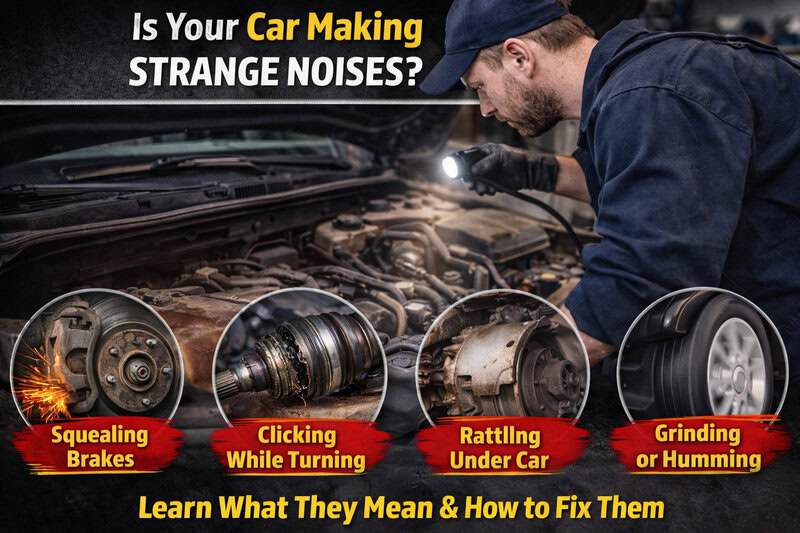
Quick Diagnosis Chart – Common Car Noises at a Glance
Before we dive deep into each issue, here’s a quick overview to help you identify what your car might be trying to tell you. This chart gives you a fast breakdown of the most common car noises, their likely causes, and how urgent they are.
| Squealing when braking | Worn brake pads | High | Inspect and replace brake pads |
| Grinding while braking | Metal-on-metal brakes | Very High | Stop driving and repair immediately |
| Knocking from the engine | Low oil or internal wear | Critical | Check the oil level right away |
| Clicking when turning | Bad CV joint | Medium | Inspect the CV axle and replace it if needed |
| Humming at highway speeds | Worn wheel bearing | Medium–High | Test and replace the bearing |
| Rattling under the car | Loose heat shield or exhaust | Low–Medium | Inspect underneath the vehicle |
| Ticking from the engine | Low oil or valve issue | Medium | Check oil and inspect valvetrain |
This quick diagnosis chart helps narrow down the problem fast. But remember — the location of the sound (front, rear, under the hood, underneath the vehicle) and when it happens (braking, accelerating, turning, idling) are just as important as the sound itself.
Now, let’s break down each of these common car noises in detail and explain exactly what’s causing them—and how to fix them for a quieter, safer, and more reliable driving experience.
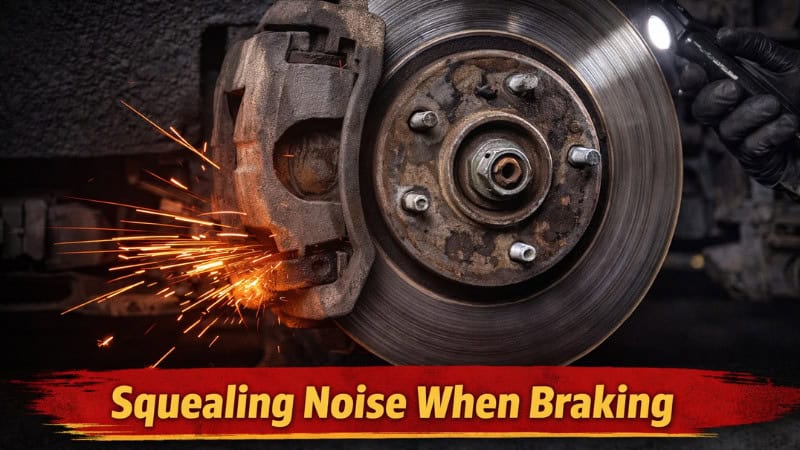
Squealing Noise When Braking
If you hear a high-pitched squeal when pressing the brake pedal, this is one of the most common car noises drivers experience. The good news? It’s usually an easy fix — if you don’t ignore it.
What It Sounds Like
A sharp, high-pitched squealing or screeching noise that happens when you apply the brakes. It may be louder at low speeds.
Most Common Cause: Worn Brake Pads
Brake pads are designed with a built-in wear indicator — a small metal tab that touches the rotor when the pad material gets thin. That contact creates the squealing sound to warn you it’s time for replacement.
In simple terms:
Your brakes are telling you they’re almost done.
Other Possible Causes
- Glazed brake rotors
- Cheap or low-quality brake pads
- Brake dust buildup
- Morning moisture (temporary and usually harmless)
How Serious Is It?
Moderate to High.
If it’s just squealing, you likely still have some brake pad material left. But if it turns into grinding, it means metal is contacting metal — and that can quickly damage your rotors.
How to Fix It
✔ Inspect brake pad thickness
✔ Replace brake pads if worn
✔ Resurface or replace rotors if damaged
✔ Clean brake components if dust buildup is heavy
Average Repair Cost
- DIY brake pad replacement: $150–$300
- Professional shop repair: $350–$700
Pro Tip:
If your steering wheel shakes while braking, along with the noise, your rotors may be warped.
Knocking or Pinging Noise from the Engine
An engine knocking sound is never something you want to ignore. Sometimes it’s minor. Other times, it’s a warning sign of major internal damage.
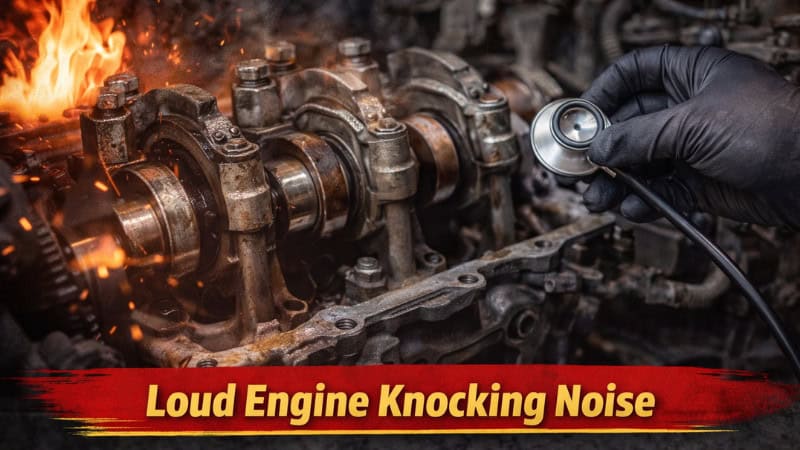
The key is identifying what type of knock you’re hearing.
What It Sounds Like
- Light metallic pinging during acceleration
- Deep knocking that gets louder as RPM increases.
- Rhythmic tapping from inside the engine
Not all knocks are equal — and the difference matters.
Common Causes of Engine Knocking
Low Engine Oil (Most Common)
Oil lubricates internal engine components. When oil levels drop too low, metal parts begin rubbing together. That creates knocking — and if ignored, it can destroy engine bearings.
What to do immediately:
- Pull over safely
- Check your oil level.
- Add oil if it’s low
If the noise improves after adding oil, you likely caught it early.
Engine Detonation (Pinging)
If you hear a light pinging sound under acceleration, especially when climbing hills, it may be detonation.
This happens when fuel ignites too early inside the cylinder.
Possible reasons:
- Using lower octane fuel than recommended
- Carbon buildup
- Faulty knock sensor
Switching to the correct fuel grade and cleaning carbon buildup can often solve this issue.
Rod Knock (Serious Internal Damage)
This is the bad one.
A deep, heavy knocking that increases with engine speed may indicate worn connecting rod bearings.
If you hear this:
- Stop driving
- Do not ignore it
- Have the vehicle inspected immediately.
Driving with a rod knock can lead to complete engine failure.
How Serious Is It?
- Light pinging: Moderate
- Oil-related knocking: High
- Rod knock: Critical
Estimated Repair Costs
- Oil issue: $0–$100
- Spark plug replacement: $150–$400
- Engine rebuild (rod knock): $2,500–$6,000+
Mechanic Insight:
If your engine knocking sound disappears after warming up, it could be piston slap — common in high-mileage engines and often not immediately dangerous.
Grinding Noise While Driving
A grinding noise is one of the most serious sounds a vehicle can make. Unlike a light squeal or mild rattle, grinding usually means metal is rubbing against metal — and that’s never good.
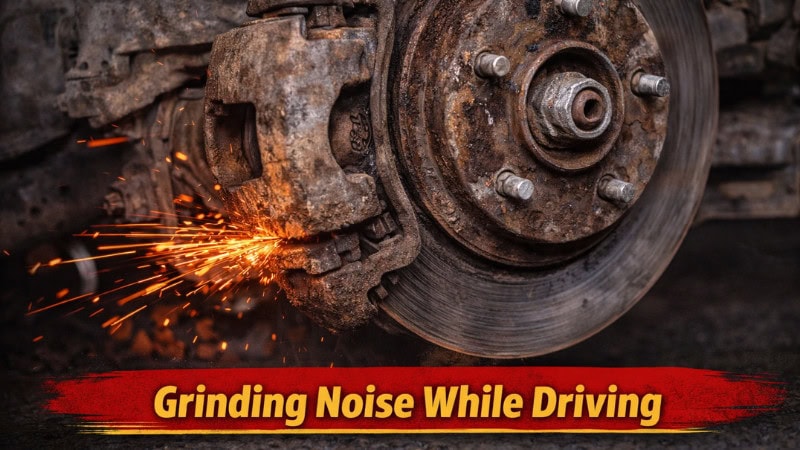
If you hear grinding, don’t ignore it.
What It Sounds Like
- Harsh metal scraping
- Crunching or growling noise
- Gets worse when braking or turning
The timing of the sound tells you a lot about the cause.
Grinding When Braking
This is the most common type.
Cause:
Worn-out brake pads that have completely lost their friction material.
When this happens, the metal backing plate presses directly against the brake rotor. That’s the grinding sound you’re hearing.
Why It’s Serious:
Driving as this can:
- Destroy your rotors
- Overheat braking components
- Reduce stopping power
Fix:
- Replace brake pads immediately.
- Replace or resurface damaged rotors.
Repair Cost:
- Pads + rotors (DIY): $300–$600
- Shop repair: $600–$1,200
Grinding That Gets Louder With Speed
If the grinding increases as you drive faster — even when you’re not braking — the issue could be a bad wheel bearing.
Signs of a Failing Wheel Bearing:
- Noise changes when you slightly turn left or right.
- Humming or growling at highway speeds
- Steering feels slightly loose.
Fix:
Replace the faulty wheel bearing.
Ignoring it can cause wheel wobble or, in extreme cases, wheel separation.
Grinding While Shifting (Manual Transmission)
If you drive a manual car and hear grinding when shifting gears, it may be:
- Worn clutch
- Bad synchronizers
- Low transmission fluid
This requires inspection before it turns into a full transmission rebuild.
How Serious Is a Grinding Noise?
Very High.
Grinding almost always means active damage is happening.
If it’s a brake-related issue, you may have limited time.
If it’s bearing-related, you shouldn’t delay repair.
Mechanic Tip:
If you’re unsure whether it’s brakes or bearings, lightly apply the brakes while driving slowly. If the sound changes, it’s likely brake-related.
Clicking Noise When Turning
If you hear a rapid clicking or popping sound while turning the steering wheel — especially during sharp turns — this is a classic sign of a failing CV joint.
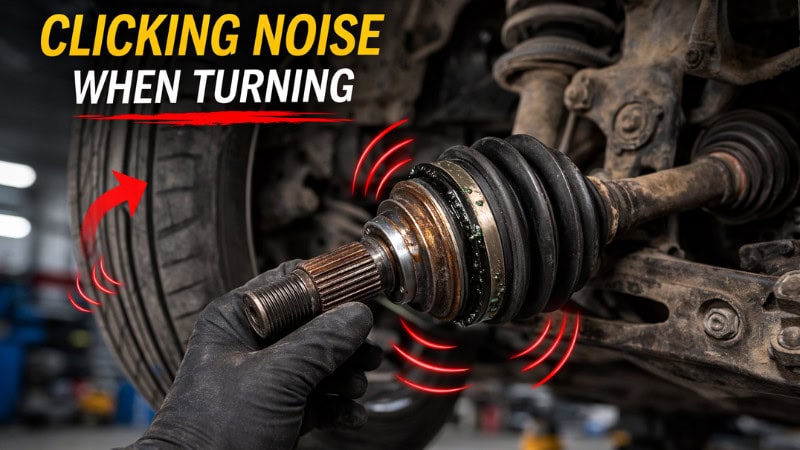
This is one of the most recognizable common car noises mechanics diagnose every day.
What It Sounds Like
- Repetitive clicking when turning
- Louder during tight turns
- Often heard during parking lot maneuvers.
If the noise only happens while turning and disappears when driving straight, that’s a big clue.
Most Common Cause: Bad CV Joint
CV (Constant Velocity) joints connect your transmission to the wheels. They allow power to transfer while the suspension moves and the wheels turn.
When the CV joint wears out or loses lubrication, it begins to click.
Why CV Joints Fail
The most common reason is a torn CV boot.
The rubber boot protects the joint and retains grease. Once it cracks:
- Grease leaks out
- Dirt gets inside
- The joint wears quickly.
Once clicking starts, the joint is usually already damaged.
How Serious Is It?
Medium to High.
You can often drive for a short time with a clicking CV joint — but eventually it can fail completely.
If a CV joint breaks:
- You may lose power to the wheels.
- The vehicle can become undriveable
How to Fix It
✔ Inspect CV boots for grease leaks
✔ Replace the CV axle assembly (most common repair)
Replacing just the boot is rarely worth it once noise begins.
Average Repair Cost
- DIY CV axle replacement: $200–$500
- Shop repair: $400–$1,000
Mechanic Insight:
If you hear clicking while driving straight, it may not be the CV joint — it could be suspension or axle-related. Proper diagnosis matters.
Rattling Noise Under the Car
A rattling noise underneath your vehicle can range from harmless to serious. The key is figuring out when it happens—at idle, while accelerating, or while driving over bumps.
The good news? Many rattles are simple fixes.
What It Sounds Like
- Metallic shaking or vibrating
- Light clanking over bumps
- Tin-like fluttering noise
- A rattle that changes with RPM.
Now let’s break down the most common causes.
Loose Heat Shield (Most Common)
This is by far the most frequent cause of rattling under a car.
Heat shields protect your vehicle’s underside from exhaust heat. Over time, the small bolts holding them in place rust or break.
When that happens, the shield vibrates — especially at certain RPMs.
Why It’s Usually Not Serious:
It doesn’t typically affect performance.
Fix:
- Tighten or replace bolts.
- Secure shield with metal clamps if needed
Cost:
- DIY: Almost free
- Shop repair: $50–$200
Exhaust System Issues
A loose exhaust pipe, broken hanger, or damaged catalytic converter can cause rattling.
Signs it may be exhaust-related:
- Louder noise during acceleration
- Smell of exhaust fumes
- Reduced engine performance
If left unchecked, exhaust leaks can become dangerous.
Suspension Components
If the rattling happens when driving over bumps, it may be:
- Worn sway bar links
- Loose control arm bushings
- Bad shock absorbers
These affect ride quality and handling, so they shouldn’t be ignored in the long term.
How Serious Is It?
- Heat shield: Low
- Exhaust leak: Medium to High
- Suspension issue: Medium
Mechanic Tip:
If the rattle disappears when you lightly press the gas pedal, it’s often a loose heat shield.
Humming or Growling Noise at Highway Speeds
If your car sounds smooth at low speeds but starts humming, droning, or growling once you hit 40–70 mph, you’re likely dealing with a rotating component issue.
This type of noise usually gets louder the faster you drive.
What It Sounds Like
- Low humming or droning sound
- Growling noise that increases with speed
- Similar to aggressive tire noise
- Changes slightly when turning left or right
The key clue? It rises with vehicle speed — not engine RPM.
Most Common Cause: Worn Wheel Bearing
Wheel bearings allow your wheels to spin smoothly with minimal friction. Over time, they wear down from heat, moisture, and road debris.
When a bearing starts failing, it produces a humming or growling sound.
How to Confirm It’s a Wheel Bearing
- Noise increases with speed.
- Noise changes when you slightly turn the steering wheel.
- Louder when turning left? Often right-side bearing
- Louder when turning right? Often left-side bearing
- Slight vibration in the steering wheel
If ignored, a bad wheel bearing can eventually cause:
- Wheel wobble
- ABS sensor issues
- Unsafe driving conditions
Other Possible Causes
Uneven Tire Wear
Cupped or unevenly worn tires can create a humming sound that mimics a bad bearing.
Differential Problems (Less Common)
In rear-wheel- or all-wheel-drive vehicles, worn differential gears can produce a growling noise.
How Serious Is It?
Medium to High.
You may be able to drive for a short time, but wheel bearings don’t fix themselves — they only get worse.
Average Repair Cost
- DIY wheel bearing replacement: $200–$500 per wheel
- Shop repair: $400–$900 per wheel
Mechanic Insight:
If the humming noise doesn’t change when turning but gets louder on certain road surfaces, check your tires first before replacing bearings.
Ticking Noise from the Engine
A ticking noise coming from the engine can be mild and harmless — or it can be an early warning sign of lubrication or valvetrain problems.
The key is identifying when the ticking happens: at startup, at idle, or during acceleration.
What It Sounds Like
- Light, rhythmic ticking
- A fast clicking sound that follows engine RPM.
- Louder when the hood is open.
Unlike deep knocking, ticking is usually sharper and lighter.
Low Engine Oil (Most Common Cause)
Oil lubricates the valvetrain components (lifters, camshaft, rocker arms). When the oil level drops too low, these parts don’t receive proper lubrication — and they begin to tick.
Signs It’s Oil-Related:
- The oil warning light may be on.
- Noise reduces after adding oil.
- Ticking gets louder when accelerating.
✔ Fix:
- Check the oil level immediately.
- Add oil if low
- Fix any oil leaks
Ignoring low oil can eventually lead to serious engine damage.
Valve Train Issues
If the oil level is normal but ticking continues, the issue could be:
- Worn hydraulic lifters
- Excessive valve clearance
- Camshaft wear
This type of ticking is more mechanical and persistent.
Repair may require partial engine disassembly.
Exhaust Manifold Leak
A small exhaust leak near the engine can create a ticking sound that mimics valvetrain noise.
Clues:
- Ticking is louder when the engine is cold.
- Noise reduces as the engine warms up.
- Slight exhaust smell
This is usually less serious than internal engine issues.
How Serious Is It?
- Low oil ticking: High (fix immediately)
- Minor lifter tick: Moderate
- Exhaust leak: Low to Medium
Average Repair Costs
- Oil top-off: $20–$80
- Lifter replacement: $800–$2,000
- Exhaust manifold repair: $300–$1,000
Mechanic Tip:
If the ticking disappears after the engine warms up, it’s often lifter-related and not immediately catastrophic — but it should still be inspected.
When Should You Stop Driving Immediately?
Not every strange car noise requires you to pull over right away. But some sounds are clear warning signs that continuing to drive could cause serious damage — or even put you in danger.
Here are the situations where you should stop driving as soon as it’s safe:
Loud Engine Knocking
If you hear deep, heavy knocking from the engine that gets louder as RPM increases, this could indicate internal bearing failure (rod knock).
Driving further can:
- Destroy your engine block.
- This led to complete engine failure.
- Turn a repair into a full replacement.
Pull over and have the vehicle towed.
Grinding Brakes
If your brakes make a loud grinding noise, especially when stopping, your brake pads may be completely worn out.
Driving as this can:
- Damage rotors
- Reduce braking power
- Create a serious safety risk.
Avoid highway driving and repair immediately.
Sudden Loud Clunking from Suspension
If you hear heavy clunking combined with loose steering or instability, it could mean:
- Broken control arm
- Failing ball joint
- Suspension component failure
These parts hold your wheels in position. If they fail completely, you could lose control.
Stop driving and inspect.
Hissing with Overheating
If you hear hissing and see the temperature rising:
- You may have a coolant leak.
- The radiator hose could be blown.
- The engine may be overheating.
Overheating can warp cylinder heads or blow head gaskets.
Turn off the engine immediately and let it cool.
Loud Wheel Bearing Growl with Vibration
If humming turns into vibration or wobbling at speed, the wheel bearing may be close to failure.
In extreme cases, it can affect wheel stability.
General Rule of Thumb
If the noise is:
- Sudden
- Loud
- Getting worse quickly
- Combined with warning lights
Don’t risk it.
Mechanic Insight:
Most expensive repairs happen because drivers ignore early warning noises. Catching problems early is the difference between a small repair and a major breakdown.
How to Prevent Strange Car Noises
The best way to deal with strange car noises is to prevent them before they start. Most unusual sounds don’t appear overnight — they develop slowly due to wear, neglect, or skipped maintenance.
A little preventative care can save you thousands in repairs.
Here’s how to keep your car quiet, smooth, and reliable.
Change Your Engine Oil on Time
This is the single most important maintenance task.
Old or low engine oil causes:
- Ticking noises
- Engine knocking
- Premature engine wear
Follow your manufacturer’s recommended oil change interval (typically every 5,000–7,500 miles for modern vehicles).
Pro Tip: Always check oil level monthly, not just at oil change time.
Inspect Your Brakes Regularly
Brake noise is one of the most common car complaints.
To prevent squealing and grinding:
- Check brake pads every 6–12 months.
- Replace pads before they wear completely.
- Avoid riding the brakes downhill.
Replacing pads early prevents expensive rotor damage.
Rotate and Balance Tires
Uneven tire wear causes:
- Humming noises
- Vibration
- Road noise at highway speeds
Rotate your tires every 5,000–8,000 miles and keep them properly inflated.
Balanced tires also protect wheel bearings and suspension components.
Check Suspension Components
Worn suspension parts create clunking and rattling noises.
Have these inspected annually:
- Sway bar links
- Ball joints
- Control arm bushings
- Shock absorbers
Catching worn components early prevents handling problems and bigger repairs.
Inspect CV Boots and Axles
A small crack in a CV boot can lead to clicking noises within months.
Look for:
- Grease around the inside of the wheels.
- Torn rubber boots
Replacing a boot early is much cheaper than replacing a full axle.
Tighten Loose Heat Shields and Exhaust Components
Heat shields and exhaust hangers can loosen over time due to rust and vibration.
During oil changes, ask your mechanic to:
- Inspect exhaust mounts
- Check for loose shields.
- Tighten any loose hardware.
Many rattles are simple hardware issues.
Don’t Ignore Warning Lights
A check engine light combined with noise is a red flag.
Scan codes early. Modern vehicles provide early warnings — use them.
Final Mechanic Advice
Strange car noises are rarely random. They’re early warning signals.
The sooner you diagnose the problem:
- The cheaper the repair
- The safer your vehicle
- The less stress you deal with
Routine maintenance isn’t just about performance — it’s about preventing expensive surprises.
Frequently Asked Questions (FAQ)
1. Why is my car making noise, but driving fine?
Your car can make strange noises long before performance problems start. Worn brake pads, loose heat shields, uneven tire wear, or a failing wheel bearing can all create noise while the vehicle still drives normally. Even if the car feels fine, unusual sounds are early warning signs and should be inspected before they become expensive repairs.
2. What is the most common car noise problem?
The most common car noise is brake squealing caused by worn brake pads. Brake pads have built-in wear indicators that produce a high-pitched sound when they need replacement. This is normal but should not be ignored, as it can turn into grinding if the pads wear out completely.
3. Can low engine oil cause knocking noises?
Yes. Low engine oil is one of the most common causes of engine knocking or ticking. Oil lubricates internal components, and when levels drop too low, metal parts rub against each other. If you hear knocking, check the oil level immediately to prevent serious engine damage.
4. Is it safe to drive with a grinding noise?
No. A grinding noise usually indicates metal-to-metal contact, often from worn brake pads or a failing wheel bearing. Driving with grinding brakes can damage rotors and reduce stopping power. It’s best to have the vehicle inspected as soon as possible.
5. Why does my car make a clicking noise when turning?
A clicking noise during turns is commonly caused by a worn CV joint. The CV joint transfers power to the wheels while allowing them to turn. When the protective boot tears and grease leaks out, the joint wears down and begins clicking. Replacement is usually required once noise starts.
6. What causes a humming noise at highway speeds?
A humming or growling noise that increases with speed is typically caused by a bad wheel bearing or uneven tire wear. If the sound changes when turning slightly left or right, it’s likely a wheel bearing issue.
7. Why does my engine tick when it’s cold?
A ticking noise when the engine is cold can be caused by low oil pressure, hydraulic lifters, or minor exhaust leaks. In many cases, the sound decreases once the engine warms up. However, persistent ticking should be inspected to prevent long-term damage.
8. How can I diagnose car noises at home?
To diagnose common car noises:
- Pay attention to when the noise occurs (braking, accelerating, turning, idling)
- Identify where the sound is coming from (front, rear, under hood, underneath vehicle)
- Check fluid levels (oil, coolant, transmission fluid)
- Inspect visible components, such as brakes and tires.
If the noise is loud, sudden, or worsening quickly, a professional inspection is recommended.
9. When should I worry about strange car sounds?
You should be concerned if the noise is:
- Loud or sudden
- Getting worse rapidly
- Accompanied by warning lights
- Affecting steering or braking
Engine knocking, grinding brakes, and overheating noises require immediate attention.
10. How do I prevent common car noises?
Prevent strange car noises by:
- Changing engine oil regularly
- Replacing brake pads before they fully wear out
- Rotating tires every 5,000–8,000 miles
- Inspecting suspension and exhaust components annually
Routine maintenance is the best way to avoid unexpected repairs.
Final Thoughts: Don’t Ignore Strange Car Noises
Strange car noises are never random. Whether it’s a squealing brake, clicking CV joint, grinding wheel bearing, or engine knocking sound, your vehicle is giving you an early warning. The difference between a small repair and a major breakdown often comes down to how quickly you act.
Most common car noises start as minor issues — worn brake pads, low engine oil, loose heat shields, uneven tire wear. But when ignored, they can lead to expensive repairs, unsafe driving conditions, and unexpected roadside breakdowns.
If your car is making noise:
- Identify when it happens (braking, accelerating, turning, idling)
- Check basic maintenance items, such as oil and brakes.
- Don’t wait; if the sound is loud, sudden, or getting worse.
Being proactive saves money. Preventive maintenance saves engines. And early diagnosis keeps you safe.
