
Pickup trucks are evolving fast — and 2026 is proving that power and fuel efficiency can finally live under the same hood. Drivers no longer have to choose between strong towing capability and better gas mileage. The best hybrid pickup trucks of 2026 deliver impressive torque, smoother acceleration, and noticeable savings at the pump — all while maintaining the toughness for which trucks are known.
Modern hybrid systems aren’t just about fuel economy anymore. They provide instant electric torque for better low-end power, improved throttle response when hauling or merging onto highways, and smarter energy management during daily driving. Whether you’re pulling a trailer, loading up tools, or commuting during the week, hybrid pickups are designed to handle real-world demands without burning through fuel.
In this guide, we’ll break down the top hybrid pickup trucks for 2026, compare real-world MPG, towing capacity, pricing, and technology, and help you figure out which model fits your lifestyle and budget. If you want a truck that works hard and saves fuel at the same time, this is where you start.
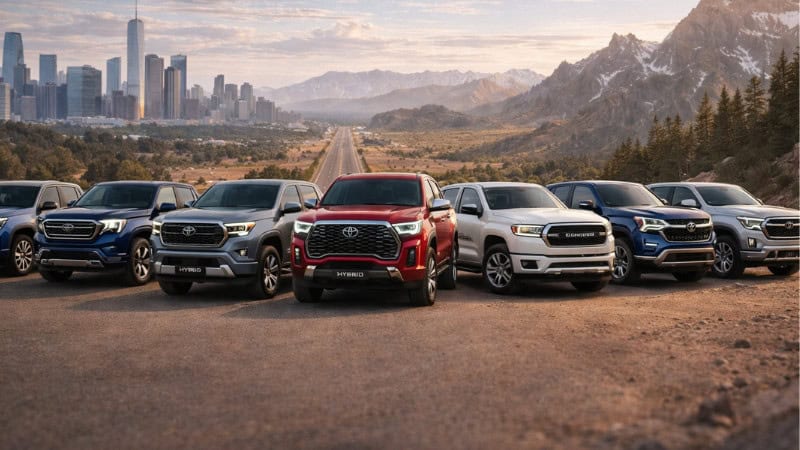
Why Choose a Hybrid Pickup in 2026?
If you’re shopping for a truck in 2026, the big question isn’t just gas vs diesel anymore — it’s whether hybrid power makes more sense for your daily grind. And honestly? For many drivers, it does.
1. Better Fuel Economy Without Losing Muscle
Hybrid pickups use an electric motor to support the gas engine, especially at low speeds. That means less fuel is burned in stop-and-go traffic and better overall MPG than in traditional full-size trucks. You still get strong towing numbers and solid payload capacity — just with fewer stops at the pump.
2. Instant Torque for Smoother Performance
One of the biggest advantages of a hybrid system is the instant electric torque it provides. When you press the pedal, power comes on smoothly and quickly. That’s a big deal when merging onto highways, towing a trailer, or climbing steep grades.
3. Lower Long-Term Fuel Costs
While hybrid trucks can cost more upfront, many drivers see savings over time through reduced fuel consumption. If you put serious miles on your truck every week, that difference adds up fast.
4. Quieter, More Refined Driving
Hybrid pickups often feel smoother and quieter, especially at lower speeds when running partially on electric power. For daily commuting or family use, that added comfort is a noticeable upgrade.
5. Future-Ready Technology
Hybrid systems are becoming more advanced and reliable each year. Automakers are refining battery management, regenerative braking, and power delivery — making 2026 models more efficient and durable than early-generation hybrids.
Bottom line? If you want a truck that still works hard but wastes less fuel doing it, hybrid pickups are no longer just an experiment — they’re a serious option.
What to Look for in a Hybrid Pickup Truck in 2026
Not all hybrid trucks are built the same. Some focus on maximum towing power, others prioritize fuel economy or comfort. Before you sign the paperwork, here’s what you should pay close attention to.
1. Real-World Fuel Economy (Not Just EPA Numbers)
Manufacturers love advertising their best-case MPG ratings. But what really matters is how the truck performs in everyday driving — highway cruising, stop-and-go traffic, towing, and loaded bed conditions.
Look for:
- Combined MPG ratings
- Owner-reported real-world fuel economy
- How MPG changes when towing
Hybrid trucks shine most in city driving, where regenerative braking helps recharge the battery.
2. Towing & Payload Capacity
A truck is still a truck. Make sure the hybrid system doesn’t compromise capability.
Check:
- Maximum towing capacity (with proper configuration)
- Payload rating
- Integrated trailer brake controller availability
- Tow/haul drive modes
Some hybrid pickups now rival traditional V8 trucks in torque output — especially with electric motor assistance.
3. Type of Hybrid System
Not all hybrids work the same way.
- Mild Hybrid (eTorque-style systems): Assists the engine but can’t drive on electric power alone.
- Full Hybrid (PowerBoost / i-Force MAX type systems): Can operate partially on electric power and deliver stronger torque support.
Full hybrids usually offer better fuel savings and stronger performance benefits.
4. Battery Warranty & Reliability
Hybrid technology has improved significantly, but warranty coverage still matters.
Look for:
- Battery warranty length (typically 8–10 years)
- Hybrid system coverage
- Brand reliability reputation
Peace of mind is important when buying advanced powertrain tech.
5. Technology & Safety Features
Modern hybrid trucks often come loaded with tech:
- Large infotainment displays
- 360° cameras
- Adaptive cruise control
- Blind-spot monitoring with trailer coverage
- Built-in power outlets (great for job sites or camping)
Some hybrid pickups even offer onboard generators for tools and equipment.
6. Price vs Value
Hybrid trucks cost more upfront than gas-only versions. Compare:
- Price difference vs gas model
- Estimated annual fuel savings
- Resale value
Sometimes the smarter choice isn’t the cheapest truck — it’s the one that makes sense long term.
Choosing the right hybrid pickup in 2026 comes down to balancing efficiency, power, comfort, and budget. Get those four right, and you’ve got a truck that works as hard as you do.
Top 7 Best Hybrid Pickup Trucks 2026
1. Ford F-150 PowerBoost Hybrid (2026)
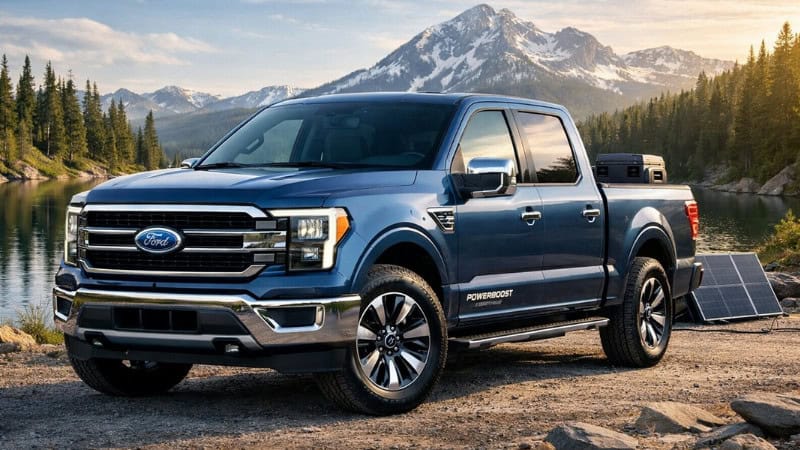
The Ford F-150 PowerBoost Hybrid remains one of the strongest hybrid pickups in 2026 thanks to its powerful, efficient setup. It pairs a 3.5-liter twin-turbo V6 with an electric motor integrated into the 10-speed automatic transmission. This combination produces 430+ horsepower and 570+ lb-ft of torque — enough to haul heavy trailers while still improving fuel economy compared to non-hybrid V8 models. The system captures energy during braking and uses it to assist the engine under load, especially at low speeds.
One of the standout tech features is Pro Power Onboard, which can deliver up to 7.2 kW of exportable power — enough to run tools or appliances without a separate generator. The hybrid setup also includes selectable drive modes (Normal, Tow/Haul, Eco, and Off-Road) to optimize performance and efficiency depending on conditions. With towing capacities exceeding 12,000 lbs (when properly configured) and modern driver-assist tech like adaptive cruise and lane centering, the PowerBoost Hybrid balances capability, comfort, and fuel savings for a strong all-around package.
2. Toyota Tundra i-Force MAX (2026)
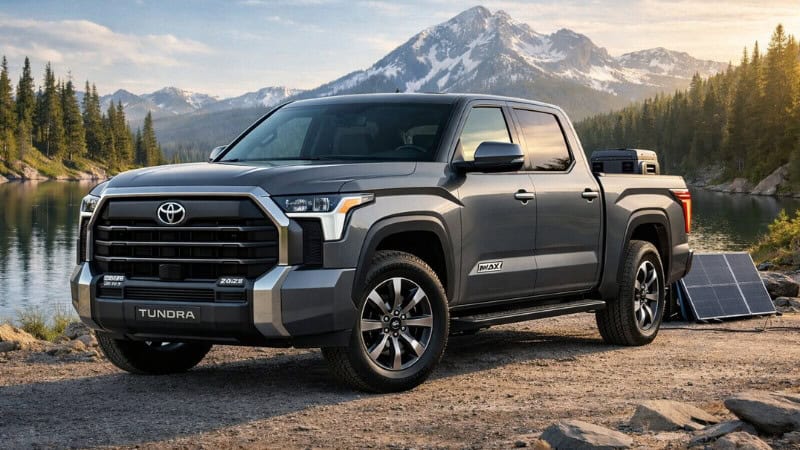
The Toyota Tundra i-Force MAX uses a full-hybrid setup featuring a 3.4-liter twin-turbo V6, an electric motor, and an 8-speed automatic transmission. Together, they generate about 437 horsepower and 583 lb-ft of torque, giving the Tundra plenty of low-end pulling power. While its EPA MPG doesn’t always lead the class, real-world efficiency is noticeably better than older V8 configurations.
Toyota’s hybrid system uses regenerative braking to store energy in the battery, which then assists the engine during acceleration and under heavy loads. Towing capacity for the i-Force MAX sits near 12,000 lbs, and payload edges toward 1,700+ lbs depending on trim and configuration. Off-road trims like TRD Pro include tech such as Multi-Terrain Select and Crawl Control that work well alongside the hybrid powertrain.
Inside, the Tundra offers a large touchscreen with Apple CarPlay/Android Auto, adaptive cruise control, and pre-collision braking systems. Toyota’s reputation for reliability, paired with solid performance and torque, makes the i-Force MAX a serious contender in 2026 hybrid truck options.
3. Ram 1500 eTorque (2026)
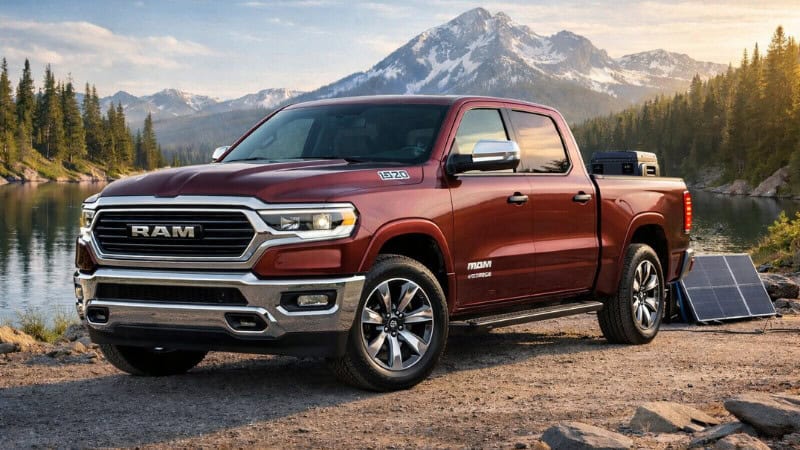
The Ram 1500 eTorque uses a mild-hybrid system attached to either the 3.6-liter V6 or 5.7-liter HEMI V8. Rather than allowing pure electric drive, the belt-driven integrated motor generator assists the engine during acceleration, smoothing start-stop traffic and improving overall efficiency. On the V6, this setup produces roughly 305–305+ horsepower with around 380 lb-ft of torque, while the V8 gets a modest boost over its gas-only counterpart.
The eTorque system enhances fuel economy in city and highway driving by smoothing torque delivery and improving idle-stop/start transitions without altering the truck’s driving character. Towing capacity still reaches near 11,000 lbs on properly equipped models, with a payload of around 1,700 lbs.
Tech highlights include a large Uconnect touchscreen with navigation, wireless Apple CarPlay/Android Auto, adaptive cruise control, and available air suspension (which improves ride quality and helps with trailer leveling). If you want a hybrid that makes everyday driving smarter and more efficient without changing the classic pickup feel, the Ram 1500 eTorque does it with minimal complexity.
4. Chevrolet Silverado Hybrid (2026)
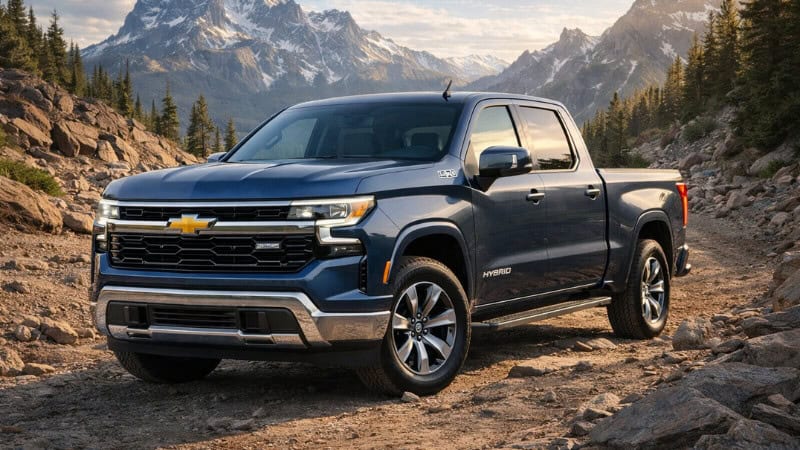
The Chevrolet Silverado Hybrid uses an electrified assist system that helps the engine accelerate and captures braking energy to boost efficiency. Combined with a V8 or V6, depending on the trim, the hybrid setup improves overall fuel economy and smoothness compared to non-hybrid variants. While exact EPA ratings for 2026 vary by configuration, drivers can expect noticeable gains — especially in mixed city/highway driving.
Towing capacity remains strong, with properly outfitted models capable of pulling 10,000+ lbs and maintaining respectable payload figures. The hybrid system’s torque assist helps keep RPMs down under load, improving both power delivery and fuel economy under heavier tasks.
Tech features include a full suite of driver-assist tools like forward collision alert, lane keep assist, and adaptive cruise control. The Silverado’s infotainment system supports wireless Apple CarPlay/Android Auto, and available trailering packages help make hitching and backing up easier.
If you want a work-ready truck with hybrid benefits and solid towing numbers, the Silverado Hybrid stands as a capable option in 2026.
5. GMC Sierra Hybrid (2026)
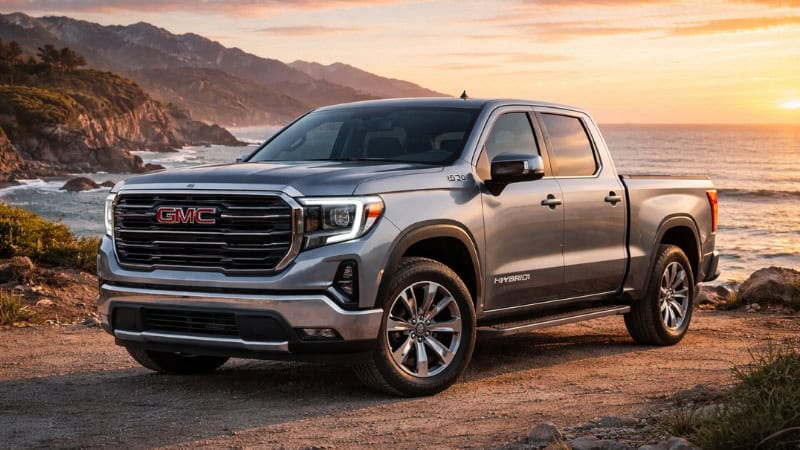
The GMC Sierra Hybrid pairs a hybrid assist system with strong V-series engines to deliver both capability and efficiency. Like its Chevrolet counterpart, the Sierra’s hybrid assist recovers braking energy and supports the engine during acceleration and heavy load conditions. This helps improve highway and city MPG compared to traditional gas-only models without lowering towing capacity.
When properly equipped, towing remains competitive at 10,000+ lbs, and payload is similar to full-size peers. Inside, Sierra differentiates itself with a more luxurious trim lineup, premium seating, larger displays, and advanced driver-assist tech like automated parking and enhanced trailering assists.
Standard infotainment includes wireless Apple CarPlay/Android Auto and a modern touchscreen interface. Features such as a head-up display and Bose premium audio offer a more upscale experience than some competitors. If you want hybrid efficiency wrapped in a refined package with strong capability, the Sierra Hybrid earns its place on this list.
6. Toyota Tacoma Hybrid (2026)
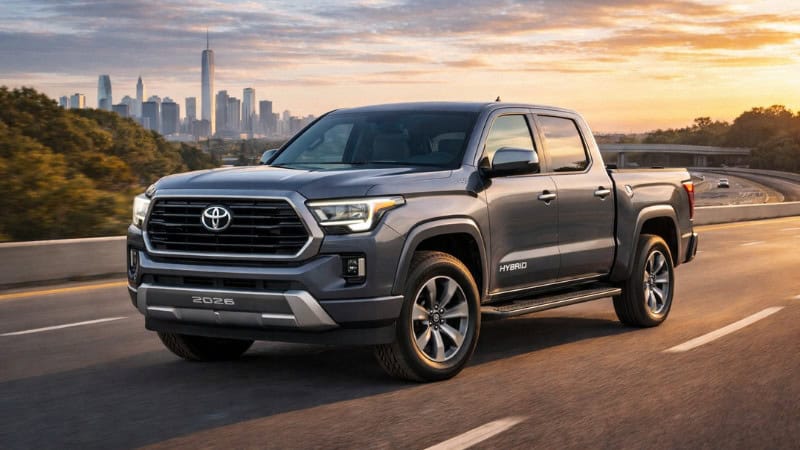
The Toyota Tacoma Hybrid introduces full-hybrid technology to the midsize segment by combining a 2.4-liter turbocharged engine with an electric motor and a CVT transmission. This setup boosts torque and improves fuel economy over Tacoma’s traditional gas powertrains, especially in stop-and-go driving, where regenerative braking helps recharge the battery.
The estimated combined horsepower sits near 270–280, with torque that makes merging and light towing feel more confident than with older four-cylinder options. Towing capacity targets around 6,000+ lbs with proper configuration — strong for a midsize truck — and payload capability remains practical for daily tasks.
The hybrid system intelligently blends electric assist to optimize efficiency without compromising responsiveness. Tech features include a touchscreen with wireless Apple CarPlay/Android Auto, Toyota Safety Sense (with lane departure alert, adaptive cruise control, and automatic emergency braking), and available off-road hardware like Multi-Terrain Select and Crawl Control.
For drivers wanting a rugged midsize pickup that saves fuel without sacrificing capability, the Tacoma Hybrid balances practicality, power, and efficiency in 2026.
7. Nissan Frontier Hybrid (2026)
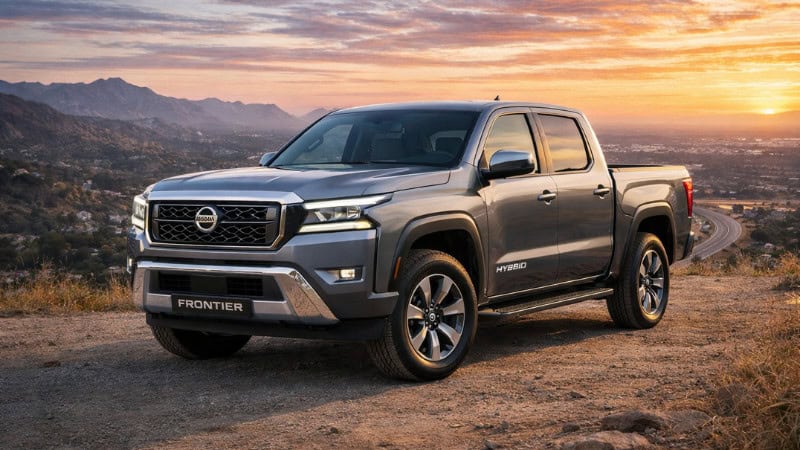
The Nissan Frontier Hybrid — expected for 2026 in select trims — takes Nissan’s practical midsize pickup and adds a hybrid assist system to improve fuel economy and throttle smoothness. The hybrid setup combines the standard turbocharged engine with an electric motor to recover braking energy and support the engine under load, improving stop-start efficiency and overall MPG.
Frontier’s hybrid version targets 250–265 horsepower and increased torque over the gas-only model, giving it confident acceleration and a slightly stronger towing feel. The estimated towing capacity aims near 6,000+ lbs, while payload figures remain competitive for its class.
Inside, tech includes an updated infotainment system with Apple CarPlay/Android Auto support, standard driver-assist systems such as blind-spot warning and automatic emergency braking, and practical features for daily use.
For buyers who want a more efficient midsize pickup with capable performance and sensible tech, the Frontier Hybrid delivers solid value and real-world usability in 2026.
Side-by-Side Comparison: Best Hybrid Pickup Trucks 2026
Here’s a clear, easy-to-scan comparison of the key technical specs for each hybrid pickup truck in 2026 — including powertrain, estimated MPG, torque, towing capacity, and target price range.
| Ford F-150 PowerBoost Hybrid | 3.5L Twin-Turbo V6 + Electric Motor | ~21–23 mpg | ~570 lb-ft | Up to ~12,200 lbs | $53,000–$65,000+ |
| Toyota Tundra i-Force MAX | 3.4L Twin-Turbo V6 Hybrid | ~21–23 mpg | ~583 lb-ft | Up to ~12,000 lbs | $55,000–$68,000+ |
| Ram 1500 eTorque | 3.6L V6 / 5.7L V8 Mild Hybrid | ~20–22 mpg | ~380–410 lb-ft | Up to ~11,000 lbs | $50,000–$62,000+ |
| Chevrolet Silverado Hybrid | V6/V8 with Hybrid Assist | ~19–22 mpg | ~420–510 lb-ft* | ~10,000+ lbs | $52,000–$64,000+ |
| GMC Sierra Hybrid | V6/V8 with Hybrid Assist | ~19–22 mpg | ~420–510 lb-ft* | ~10,000+ lbs | $54,000–$67,000+ |
| Toyota Tacoma Hybrid | 2.4L Turbo I-4 Hybrid | ~23–25 mpg | ~280 lb-ft | ~6,000+ lbs | $38,000–$45,000+ |
| Nissan Frontier Hybrid | Turbo I-4 Hybrid (Expected) | ~22–24 mpg | ~265 lb-ft | ~6,000+ lbs | $37,000–$44,000+ |
Notes:
- Estimated MPGs are based on early manufacturer figures; real-world results may vary.
- Torque figures reflect hybrid electric assist where applicable.
- Towing capacities can depend on cab, bed, axle ratio, and optional packages — check specific configs for exact numbers.
- Price ranges are base estimates and can increase significantly with trim, packages, and options.
Which Hybrid Truck Fits Your Needs?
Here’s a quick decision guide:
- Best for Maximum Towing: Ford F-150 PowerBoost & Toyota Tundra i-Force MAX — strong torque and high tow ratings.
- Best for Smooth Ride & Comfort: Ram 1500 eTorque & GMC Sierra Hybrid — refined interiors with hybrid assist tech.
- Best Balance of Size & Efficiency: Toyota Tacoma Hybrid & Nissan Frontier Hybrid — midsize efficiency without sacrificing capability.
- Best for Work Sites: Chevy Silverado Hybrid — reliable performance with hybrid fuel benefits.
Real-World Fuel Economy: What to Expect in 2026
Getting a hybrid pickup doesn’t automatically mean you’ll see huge MPG numbers everywhere — but it does mean smarter fuel use in everyday driving. Here’s what you need to know about how these trucks behave out on the road.
City Driving — Where Hybrids Shine
Hybrid pickups often deliver their biggest fuel savings in stop-and-go city traffic. That’s because regenerative braking — which captures energy when you slow down — helps recharge the battery and reduce how often the engine has to work. In real-world use, many hybrid pickups can achieve 3–5 mpg better in city driving than their gas-only counterparts.
Highway Cruising — Still Efficient, But Less Dramatic
On the open road, the benefits aren’t as extreme because the engine runs more steadily. Still, you can expect a slight mpg edge over a non-hybrid truck, especially with systems that keep the engine at more efficient RPMs. For some 2026 models, highway mpg gains might be 1–3 mpg higher than those of similar gas trucks.
Towing — Know What’s Real
Towing always cuts into fuel economy, even with hybrid tech helping. But hybrid pickups tend to hold speed with less throttle demand, meaning they can outperform a traditional gas-only truck, especially on long grades and rolling hills. Expect fuel use to climb with heavy trailers, but hybrids usually reduce the worst of that penalty.
Stop/Start Tech and Drive Modes
Most hybrid pickups include intelligent stop/start systems and selectable drive modes (like Tow/Haul, Eco, and Normal). Using Tow/Haul when pulling loads and Eco for daily commuting can optimize fuel use without sacrificing performance.
Tips for Best MPG in a Hybrid Truck
- Light throttle: Smooth acceleration makes hybrid systems work more efficiently.
- Use regenerative braking: Let the truck recharge the battery while slowing down.
- Manage payload and aerodynamics: Less cargo weight and fewer roof-mounted accessories help MPG.
- Keep tires properly inflated: Even hybrids benefit from good tire maintenance.
Tech & Safety Features in 2026 Hybrid Pickup Trucks
Modern hybrid pickups aren’t just about fuel savings and torque — they also come loaded with advanced technology and safety systems that make driving easier, smarter, and more secure.
1. Advanced Driver Assistance Systems (ADAS)
Most 2026 hybrid pickups include a full suite of driver-assist tech designed to help prevent accidents and reduce stress on long drives:
- Adaptive Cruise Control: Keeps a set distance behind traffic automatically.
- Automatic Emergency Braking: Detects sudden stops ahead and applies brakes if you don’t react in time.
- Lane Keep Assist: Helps prevent unintentional drifting on highways.
- Blind-Spot Monitoring with Trailer Coverage: Alerts you to vehicles beside and behind your trailer — super useful when towing.
These systems aren’t just nice add-ons — they help keep you and your passengers safer every day.
2. Infotainment & Connectivity
Tech in 2026 trucks is more intuitive and connected than ever:
- Large Touchscreens (10″+): Crisp displays make navigation and media easier to use.
- Wireless Apple CarPlay & Android Auto: Seamless smartphone integration without plugging in.
- Built-In Navigation: Helpful for long road trips or jobsite routing.
- Wi-Fi Hotspot: Keeps devices connected on the go.
Some trucks even offer voice-activated controls so you can keep your hands on the wheel.
3. Power Export & Worksite Features
Hybrid pickups often double as mobile powerhouses:
- Pro Power Onboard / Portable Power Outlets: Let’s you power tools, lights, or appliances right from the truck — perfect for job sites or camping.
- 220V Outlets & High Wattage Support: Some models go beyond basic USB and offer real 110–220V plug access.
This adds real utility beyond driving — your truck can power what you need, wherever you are.
4. Hybrid Display & Energy Feedback
Hybrid trucks show what’s happening with the powertrain:
- Real-Time MPG & Battery Flow: See how electric assist is helping or recharging.
- Energy Usage Animation: Helps you understand when the hybrid system kicks in.
This makes it easier to adapt driving habits for maximum efficiency.
5. Trailer Tech & Towing Aids
If you tow often, tech matters:
- Trailer Sway Control: Keeps big rigs stable in crosswinds or lane changes.
- Rear-View Camera with Guidelines: Makes hitching and backing easier.
- Zoom/Wide Towing Views: Extra visibility behind trailers.
- Integrated Trailer Brake Controller: Smooth braking without aftermarket add-ons.
In 2026, hybrid pickup trucks are more than just efficient — they’re smarter, safer, and better equipped for both work and everyday life.
Cost of Ownership — Hybrid vs Gas Trucks (2026)
Buying a hybrid pickup usually means spending a bit more at the dealership, but over time the total cost of ownership can balance out — and sometimes even work in your favor. Here’s how hybrid trucks stack up against traditional gas-only trucks when you look at fuel, maintenance, and resale value.
1. Upfront Price vs Value Gained
Hybrid pickups typically cost $2,500–$7,000+ more than comparable gas-only models. That might feel like a lot at first, but hybrid systems are designed to save money over the long haul by reducing fuel use — especially if you drive a lot or tow heavy loads often.
2. Fuel Costs — Where Hybrids Shine
Fuel savings are the biggest advantage:
- City Driving: Hybrid trucks can save several miles per gallon compared to gas-only trucks, which adds up fast on daily commutes or in stop-and-go traffic.
- Highway: Gains are smaller but still real.
If you’re putting 15,000+ miles per year on your truck, better fuel economy can translate to hundreds or thousands saved in annual fuel costs.
3. Maintenance & Reliability
Hybrid drivetrains are more complex, but modern systems are proven and built to last:
- Engine Wear: The electric assist reduces the workload of the gasoline engine in many situations, which can lower wear on pistons, belts, and accessories over time.
- Brake Life: Regenerative braking in hybrids reduces mechanical brake use, which often means longer brake pad life.
- Battery Warranty: Most manufacturers cover hybrid battery systems for 8–10 years or 100,000+ miles.
Routine items like oil changes and filters remain the same as regular trucks.
4. Resale Value
Hybrid trucks often hold value well because fuel costs are a priority for many buyers — especially in used markets where MPG is an easy selling point. That means your resale price may stay stronger than expected.
5. Real Examples of Savings
Here’s a simple way to think about it:
If a gas truck averages 16–18 mpg and a hybrid version averages 20–22 mpg, that’s a real difference at the pump — especially if fuel prices stay high.
For many owners, the fuel savings over 3–5 years can offset some or all of the hybrid premium upfront.
Best Hybrid Pickup Trucks by Category (2026)
Not all buyers want the same things out of a hybrid pickup — some care most about towing, others want comfort, and some want the best value for everyday driving. Here’s a breakdown of the top hybrid trucks in 2026 by what they’re best at:
Best for Towing Power
Ford F-150 PowerBoost Hybrid & Toyota Tundra i-Force MAX: If hauling heavy trailers or large loads is your priority, these two are hard to beat. With high torque output (570+ lb-ft on the F-150 and ~583 lb-ft on the Tundra) and towing capacities near 12,000+ lbs, both deliver strong performance under load, and the hybrid assist helps reduce fuel use while towing.
Best for Work and Daily Use
Chevrolet Silverado Hybrid & GMC Sierra Hybrid: These trucks strike a balance between everyday usability and capability. Strong towing figures (around 10,000+ lbs), modern tech, and hybrid systems that assist with acceleration and fuel efficiency make them solid choices for both job sites and daily driving.
Best for Smooth Ride & Comfort
Ram 1500 eTorque: The mild-hybrid eTorque system improves throttle response and smoothness, especially around town. Coupled with a refined interior and comfortable ride, it’s ideal for those who want hybrid benefits without losing a classic pickup feel.
Best Midsize Hybrid Trucks
Toyota Tacoma Hybrid & Nissan Frontier Hybrid: In the midsize segment, these hybrid options offer good everyday MPG, respectable torque figures, and practical towing capacities of around 6,000+ lbs. They’re excellent options if you don’t need full-size power but still want real hybrid efficiency and capability.
Quick Recap
| Towing Power | F-150 PowerBoost Hybrid / Tundra i-Force MAX |
| Work + Daily Use | Silverado Hybrid / Sierra Hybrid |
| Smooth Ride + Comfort | Ram 1500 eTorque |
| Midsize Efficiency | Tacoma Hybrid / Frontier Hybrid |
Each of these trucks brings something different to the table — but all prove that 2026 is a strong year for hybrid pickup performance, capability, and efficiency.
Pros & Cons of Hybrid Pickup Trucks in 2026
Hybrid pickup trucks have come a long way — and in 2026, they offer real capability and efficiency. But like any technology, there are clear advantages and some trade-offs. Here’s an honest look to help you decide whether a hybrid pickup fits your needs.
Pros of Hybrid Trucks
Better Fuel Economy in Real Driving: Hybrids use an electric motor to assist the engine, especially in city traffic and at low speeds. That means fewer stops at the gas station and better MPG in everyday use — often several miles per gallon more than comparable gas-only trucks.
Instant Torque & Smoother Power Delivery: Electric assist delivers torque instantly at low RPMs, giving smoother acceleration and improved throttle response. That makes merging, towing, and climbing hills feel more confident.
Regenerative Braking Extends Brake Life: Hybrid systems capture energy when slowing, reducing wear on traditional brakes. That often means longer brake pad life and lower maintenance costs over time.
Strong Towing & Payload Still Possible: Modern hybrids don’t compromise capability. Many 2026 pickups still tow heavy trailers and haul respectable payloads while improving efficiency.
Advanced Technology & Safety Features: Hybrid trucks generally come with up-to-date infotainment and driver-assist tech — including adaptive cruise control, blind-spot monitoring, lane-keep assist, and more.
Cons of Hybrid Trucks
Higher Upfront Cost: Hybrid versions are usually pricier than gas-only trucks. That initial cost can be a hurdle if you’re budget-focused.
Slight Weight Increase: Hybrid systems add battery and electrical hardware, which means a bit more weight compared to traditional trucks. In some cases, that can slightly affect payload capacity.
Complex Tech Can Mean Higher Repair Costs: While hybrid systems are generally reliable, complex components like battery packs and electric motors can be more expensive to repair or replace — especially out of warranty.
Less MPG Advantage on Long Highway Runs: Hybrids deliver the biggest fuel savings in city or mixed driving. On long highway trips, the MPG improvements are usually smaller.
FAQs
Are hybrid trucks worth it in 2026?
Yes — for many drivers, hybrid pickup trucks are absolutely worth it in 2026. Modern hybrid systems now deliver strong torque, competitive towing capacity, and noticeably better fuel economy compared to traditional gas-only trucks. If you drive frequently in city traffic, commute daily, or rack up high yearly mileage, the fuel savings alone can make a difference over time. Hybrids also offer smoother acceleration thanks to instant electric torque and often come with advanced tech and safety features. However, if you drive very few miles per year or prioritize the lowest upfront cost, a gas-only truck may still be the more budget-friendly option. Overall, hybrid pickups now provide real-world capability without the compromise they once had.
How much better MPG can I expect vs gas trucks?
In most cases, hybrid pickup trucks deliver 2–5 MPG better than comparable gas-only models, depending on driving conditions. The biggest gains usually happen in city or stop-and-go traffic, where regenerative braking helps recharge the battery and reduce engine workload. On the highway, the improvement is smaller — typically around 1–3 MPG. While that may not sound dramatic, the difference adds up over time, especially if you drive 15,000 miles or more per year. For drivers who tow frequently, hybrids can also maintain more stable efficiency under load compared to traditional engines. The real savings depend on how and where you drive.
What’s the best towing hybrid pickup?
For 2026, the top towing hybrid pickups are the Ford F-150 PowerBoost Hybrid and the Toyota Tundra i-Force MAX. Both produce strong torque figures — over 570 lb-ft in some configurations — and can tow close to or above 12,000 pounds when properly equipped. These trucks combine a turbocharged engine with electric motor assist, which provides immediate low-end torque and smoother power delivery when pulling heavy trailers. While midsize hybrid trucks offer respectable towing capacity, full-size hybrid pickups remain the best choice for serious hauling. If maximum towing performance is your priority, look for a full hybrid system rather than a mild-hybrid setup.
Do hybrid pickups cost more to maintain?
Hybrid pickups don’t necessarily cost more to maintain in routine service. Oil changes, filters, tires, and suspension components are similar to gas-only trucks. In fact, regenerative braking can reduce brake pad wear, potentially lowering the frequency of brake replacements. However, hybrid systems include additional components like battery packs, electric motors, and power control modules. While these systems are generally reliable and covered by long warranties (often 8–10 years), repairs outside warranty can be more expensive than traditional engine repairs. Overall, most owners find that maintenance costs are comparable, especially when balanced against fuel savings and improved efficiency over time.
Conclusion — Best Hybrid Pickup Trucks 2026
Hybrid pickup trucks have officially moved beyond the “experiment” phase. In 2026, they deliver real torque, strong towing capacity, modern technology, and noticeable fuel savings — all without sacrificing the toughness drivers expect from a pickup. Whether you’re hauling equipment, towing a trailer, commuting daily, or heading out for weekend adventures, today’s hybrid trucks prove you don’t have to choose between capability and efficiency anymore.
Full hybrid systems like those found in leading full-size trucks offer impressive low-end torque and towing power, while midsize hybrid pickups provide a practical balance of everyday usability and improved MPG. Mild-hybrid options also deliver smoother acceleration and improved stop-and-go efficiency for drivers who want subtle improvements without altering the truck’s traditional feel.
If fuel economy, smoother performance, and long-term value matter to you, the best hybrid pickup trucks of 2026 deserve serious consideration. Compare towing ratings, real-world MPG, technology features, and pricing carefully — and choose the truck that matches how you actually drive.
The right hybrid pickup isn’t just about saving fuel — it’s about working smarter on every mile.
