
If you’ve ever looked at a repair bill and thought, “I could’ve done that myself,” you’re not alone. Labor costs add up quickly, even for simple jobs like brake pad replacement, oil changes, or spark plug swaps. That’s why having the best tools for DIY car repair isn’t just convenient; it’s a smart way to save money. The right tools can turn frustrating repairs into smooth weekend projects in your own garage.
DIY car repair isn’t about replacing professional mechanics. It’s about handling basic car maintenance and common repairs with confidence, such as diagnosing a check engine light, changing fluids, replacing a battery, or tackling minor suspension work. With a solid list of car repair tools, you can avoid stripped bolts, damaged parts, and wasted time.
Whether you’re starting your home garage from scratch or upgrading your current tool collection, this guide covers the essential mechanic tools, automotive hand tools, diagnostic equipment, and power tools every DIYer should have. Let’s build your garage the smart way.
Why Every DIY Car Owner Needs the Right Tools
Let me tell you something straight from the shop floor: using the wrong tool can cost you more than not doing the job at all. Rounded bolts, stripped threads, cracked plastic clips—I’ve seen it all. That’s why having the right DIY auto repair tools isn’t optional. It’s the difference between a clean repair and a headache that lasts all weekend.
First, the proper automotive hand tools protect your vehicle. A correctly sized socket prevents lug nuts from rounding off. A quality torque wrench keeps you from over-tightening bolts and damaging aluminum engine components. Cheap or incorrect tools are among the biggest reasons beginners run into trouble with basic car maintenance.
Second, the right tools save serious time. A good ratchet with smooth gearing, a deep socket set, or a cordless impact wrench can cut your repair time in half. Whether you’re replacing brake pads, doing an oil change, or diagnosing a car that won’t start, efficiency matters.
And most importantly, safety. Proper car lifting equipment, jack stands, and mechanic gloves aren’t just accessories. They’re essential. Working under a car without the right setup is risky.
Bottom line? The best mechanic tools make DIY car repair faster, safer, and way more satisfying.
Essential Hand Tools for DIY Car Repair
If you’re serious about DIY auto repair, this is where your garage foundation begins. These essential mechanic tools handle most oil changes, brake jobs, suspension work, battery replacements, and engine repairs. I always tell beginners to build up their hand tools first; power tools can come later. A strong set of automotive hand tools will get you through 70 to 80 percent of common car repairs.
Socket Set (Metric & SAE)
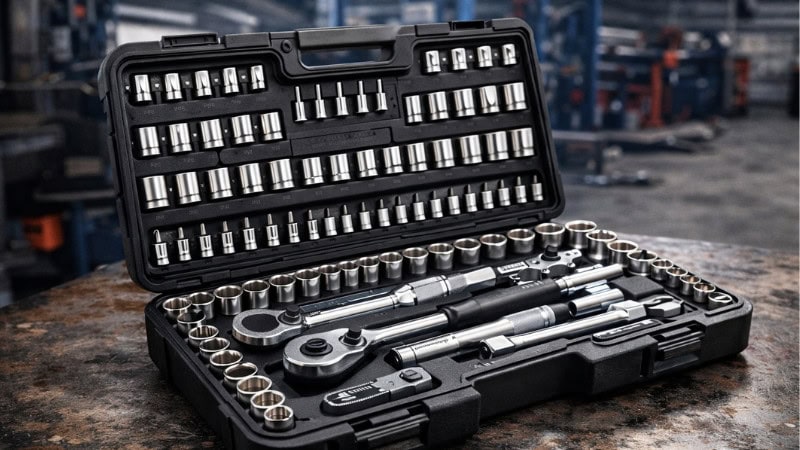
A quality automotive socket set is the most used tool in any garage. From removing lug nuts to working on engine components, sockets make the job faster and safer than wrenches alone.
Modern vehicles mostly use metric sizes (8mm–19mm are common), but having SAE sockets covers older or specialty hardware. You’ll want:
- 3/8” drive (best all-around size for engine & brake work)
- 1/2” drive (for suspension bolts & lug nuts)
- Deep sockets (for spark plugs and long studs)
- 6-point sockets (better grip, less bolt rounding)
A smooth 72-tooth ratchet makes tight engine bay work much easier.
Product Suggestion
DEWALT 192 Pcs... CRAFTSMAN 230 Pcs...These complete mechanic tool sets are perfect for beginners building a home garage setup.
Ratchets & Extensions
A ratchet is only as good as its mechanism. Cheap ratchets can slip under load, and that’s how knuckles get busted.
Look for:
- Fine-tooth ratchet (72T or 90T for tight spaces)
- Multiple extension bars (3”, 6”, 10”)
- Universal joint adapter (for angled bolts)
Extensions are lifesavers when working deep inside the engine bay or under intake manifolds. If you’ve ever replaced a starter motor or alternator, you know what I mean.
Product Suggestion:
GEARWRENCH 3 Piece...
This type of set is durable, smooth, and perfect for serious DIYers.
Combination Wrench Set (Metric & SAE)
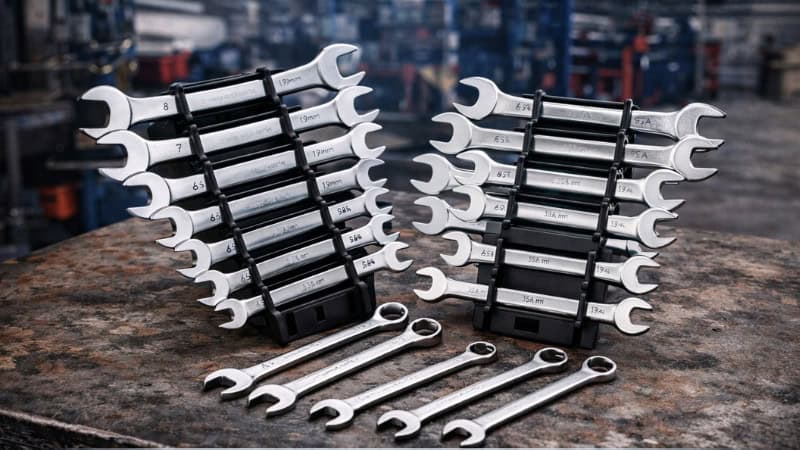
Sometimes a socket just won’t fit, especially around brake lines, fuel systems, or tight suspension brackets. That’s when a combination wrench set becomes essential.
Each wrench has:
- Open-end side (quick positioning)
- Box-end side (stronger grip, less slipping)
Chrome-vanadium steel construction resists rust and bending. Start with sizes 8mm–19mm (metric) and 1/4”–3/4” (SAE).
Product Suggestion:
TEKTON Combination... Affordable, durable, and perfect for home garage repairs.Screwdriver Set (Including Torx & Hex)
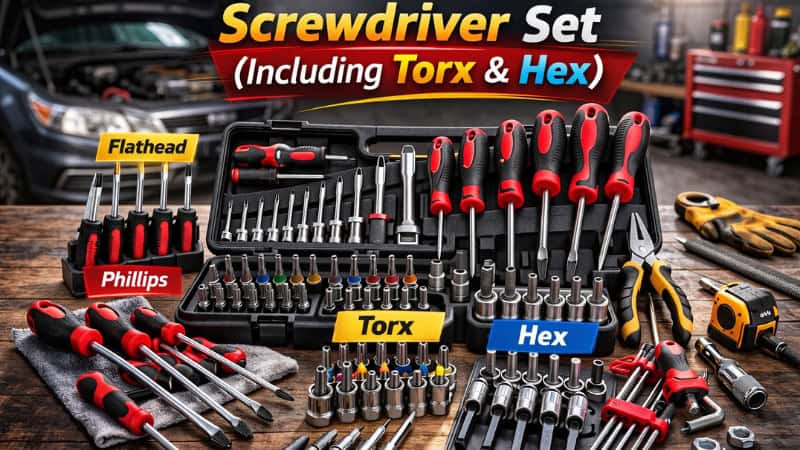
Modern vehicles use more than just flathead and Phillips screws. Interior panels, sensors, throttle bodies, and trim pieces often use:
- Phillips
- Flathead
- Torx (T15–T30 common sizes)
- Hex / Allen bits
A magnetic tip helps prevent screws from dropping into engine bays. A stubby screwdriver is great for tight spaces in the dashboard.
Product Suggestion:
Wera...
or
CRAFTSMAN...Pliers & Cutters
Pliers are the unsung heroes of DIY car repair tools. You’ll use them constantly for hose clamps, electrical connectors, cotter pins, and stubborn clips.
Must-have types:
- Needle-nose pliers (tight spaces & clips)
- Slip-joint pliers (general gripping)
- Locking pliers / Vise-Grips (holding stripped bolts)
- Side cutters (electrical wire work)
Look for hardened steel jaws and comfortable grips. Cheap pliers bend under pressure, and that’s when bolts fight back.
Product Suggestion:
Channellock VJ...
Strong grip, long-lasting durability, and widely trusted by mechanics.
Torque Wrench (Don’t Skip This One)
If you’re doing brake jobs, wheel installs, spark plugs, or suspension work, a torque wrench is a must. Over-tightening can strip aluminum threads or warp brake rotors. Under-tightening can be dangerous.
Look for:
- 1/2” drive (lug nuts & suspension)
- Click-style torque wrench
- Clear ft-lb and Nm scale
Always follow factory torque specs.
Product Suggestion:
TEKTON 1/2 Inch...
Reliable and beginner-friendly.
Bottom Line
These essential hand tools for DIY car repair form the backbone of your home garage. With a proper socket set, ratchets, wrench set, screwdrivers, pliers, and torque wrench, you can confidently handle:
- Oil changes
- Brake pad replacement
- Spark plug swaps
- Battery replacement
- Basic suspension work
Build this foundation first and upgrade later. That’s how smart DIY mechanics do it.
Power Tools That Make DIY Car Repair Faster & Easier
Once you have your essential hand tools, it’s time to take the next step. Power tools don’t replace skill; they make you more efficient. The right automotive power tools can cut your repair time in half, reduce fatigue, and make tough jobs much easier in a home garage.
If hand tools are the foundation, power tools are the upgrade that turns you from a beginner into a serious DIY mechanic.
Cordless Impact Wrench (Game Changer Tool)
If you only buy one power tool for car repair, make it a cordless impact wrench. This tool removes stubborn lug nuts, suspension bolts, and rusted fasteners in seconds.
Perfect for:
- Tire rotation
- Brake jobs
- Strut replacement
- Suspension work
Look for:
- 1/2” drive
- At least 250–400 ft-lbs torque (for DIY use)
- Lithium-ion battery system
Cordless models are cleaner and more convenient than air tools because you don’t need a compressor.
Milwaukee Electric... DEWALT 20V MAX...Electric Ratchet (Tight Space Hero)
An electric ratchet is perfect for engine bay work where space is limited. It speeds up removing bolts once they’re cracked loose.
Great for:
- Valve cover removal
- Intake manifold bolts
- Interior work
- Under-dash repairs
Look for:
- 3/8” drive
- Slim head design
- Variable speed trigger
This tool saves serious time during repetitive bolt removal.
Power Drill & Bit Set
A quality cordless drill is essential for more than just home projects. In automotive repair, it helps with:
- Removing rusted screws
- Cleaning gasket surfaces (with wire brush attachment)
- Drilling broken bolts (with extractor bits)
- Installing accessories
Make sure you have:
- Drill bits (metal-rated)
- Wire brush attachments
- Bolt extractor kit
Angle Grinder (For Rust & Stubborn Hardware)
An angle grinder becomes essential when bolts are completely seized or rusted beyond saving.
Used for:
- Cutting rusted exhaust bolts
- Removing damaged fasteners
- Cleaning heavy rust
- Cutting metal brackets
Safety tip: Always wear safety glasses and gloves.
Makita 9557PB...Affordable and durable for garage use.
Work Light (Highly Underrated Tool)
Lighting is everything in automotive repair. Poor visibility leads to mistakes.
A bright LED rechargeable work light helps you:
- Inspect leaks
- See the wiring clearly.
- Work under the car safely.
- Diagnose engine issues
Magnetic base lights are extremely useful for undercar work.
Smart Product Suggestion:
“Rechargeable Magnetic LED Work Light for Mechanics”
Why Power Tools Are Important in DIY Auto Repair.
Power tools reduce:
- Physical strain
- Repair time
- Frustration with stubborn bolts
They increase:
- Efficiency
- Professional-level results
- Confidence
For a serious home garage tool setup, start with a cordless impact wrench and a drill. Add other tools as your projects grow.
Diagnostic Tools Every DIY Mechanic Should Own
If you’re serious about DIY car repair, here’s the truth:
Stop guessing. Start diagnosing.
Modern vehicles have many sensors, modules, and onboard computers. Without the right car diagnostic tools, you’re just guessing and replacing parts, which can get expensive quickly.
These tools help you diagnose a check engine light, charging system problems, misfires, and electrical issues like a professional mechanic.
OBD2 Scanner (Check Engine Light Reader)
An OBD2 scanner is the first diagnostic tool every DIYer should buy. When your check engine light comes on, this tool reads the trouble codes stored in your car’s computer.
It helps you:
- Read and clear engine codes.
- Identify misfires (P0300 series codes)
- Diagnose oxygen sensor issues.
- Check transmission-related codes
- Monitor live data (advanced models)
Basic code readers are affordable and perfect for beginners. Bluetooth OBD2 scanners connect to your phone for live data monitoring and deeper diagnostics.
Look for:
- Live data capability
- ABS/SRS scanning (higher-end models)
- Compatibility with your vehicle year
If you’re building a serious DIY garage, this tool pays for itself quickly.
Digital Multimeter (Electrical Testing Essential)
Electrical problems are common, like bad alternators, weak batteries, blown fuses, or faulty sensors. A digital multimeter helps you safely test voltage, resistance, and continuity.
You can use it to:
- Test the car battery voltage.
- Check alternator output
- Diagnose parasitic battery drain.
- Test sensors and wiring
- Check fuses properly
Look for:
- Auto-ranging feature
- Backlit display
- Durable rubber casing
Smart Product Suggestion:
Fluke 117 Digital...
Klein Tools MM...
This is one of the most important automotive electrical diagnostic tools you can own.
Battery Tester
Sometimes a car won’t start, and you assume it’s the battery — but it might be the alternator or starter. A battery tester gives you a quick, accurate answer.
It checks:
- Battery health
- Cold cranking amps (CCA)
- Charging system performance
Instead of guessing, you get real numbers.
ANCEL BA101 Car...It’s a small investment that can lead to big savings.
Infrared Thermometer (Hidden Gem Tool)
An infrared thermometer helps diagnose overheating issues and brake problems.
Use it to:
- Check radiator temperature differences.
- Identify clogged coolant passages.
- Detect dragging brake calipers.
- Compare cylinder temperatures
This tool is extremely useful but often overlooked in DIY auto repair setups.
Etekcity Infrared...Why Diagnostic Tools Matter in DIY Auto Repair
Replacing parts without proper diagnosis wastes money. Modern vehicles require careful troubleshooting.
With the right diagnostic tools, you can:
- Fix the check engine lights correctly
- Identify charging system issues
- Avoid unnecessary part replacements
- Save hundreds (or thousands) in labor
For any serious DIY mechanic tools list, an OBD2 scanner and a multimeter are non-negotiable.
Lifting & Safety Equipment (Don’t Skip This)
Let me say this as I would in a real shop:
No repair is worth risking your life.
Working under a vehicle without proper car lifting equipment is one of the most dangerous mistakes DIYers make. A hydraulic jack alone is not enough. If you’re building a serious home garage setup, safety tools are just as important as sockets and ratchets.
Hydraulic Floor Jack
A solid hydraulic floor jack makes lifting your vehicle smooth and controlled. It’s essential for:
- Brake pad replacement
- Tire rotation
- Suspension work
- Oil changes (on low-clearance vehicles)
Look for:
- At least 3-ton capacity (safe for most SUVs & trucks)
- Low-profile design (for lowered cars)
- Steel or heavy-duty aluminum build
Never use a small emergency trunk jack for garage repairs.
Smart Product Suggestion (Search on Amazon):
ARCAN 3-Ton Hybrid...
Jack Boss 3 Ton Low...
These are reliable for serious DIY auto repair.
Jack Stands (Mandatory, Not Optional)
After lifting the car, you must support it with jack stands. This is non-negotiable.
Use jack stands for:
- Brake service
- Exhaust repair
- Suspension jobs
- Under-car inspections
Look for:
- 3-ton or 6-ton rated stands
- Wide base for stability
- Double-locking safety design. Place them under the proper lift points and never under thin sheet metal.
Smart Product Suggestion:
Torin 3 Ton...
Always use them in pairs.
Wheel Chocks
Wheel chocks prevent the vehicle from rolling while lifted. Even with the parking brake on, always use chocks on the opposite wheels.
This is especially important when:
- Lifting front wheels
- Working on sloped driveways
- Performing suspension work
Smart Product Suggestion:
MaxxHaul Solid...
It’s a small tool that makes a big difference for safety.
Mechanic Gloves & Safety Glasses
Protect your hands and eyes — always.
Mechanic gloves:
- Protect against cuts
- Improve grip on oily parts.
- Reduce hand fatigue
Safety glasses:
- Protect from rust debris.
- Essential when grinding or drilling
- Required for undercar work
👉 Smart Product Suggestion:
Mechanix Wear...
3M Safety Glasses...
Creeper & Work Mat (Comfort = Better Work)
If you’re doing undercar repairs regularly, a rolling mechanic creeper or thick work mat saves your back and keeps you comfortable.
Comfort leads to:
- Better focus
- Cleaner work
- Safer movement under the vehicle
Why Safety Equipment Is Part of Every DIY Car Repair Tool List
A proper garage safety setup allows you to:
- Work confidently under your car.
- Prevent accidents
- Avoid serious injury
- Perform professional-level repairs at home.
The best tools for DIY car repair aren’t just about speed; they’re about doing the job safely.
Specialty Tools for Advanced DIY Repairs
Once you’ve done oil changes and brake pad replacements a few times, you’ll start moving on to bigger jobs like suspension work, gasket replacement, brake caliper service, or even light engine repairs. That’s when specialty automotive tools become essential. These tools aren’t used every weekend, but when you need them, nothing else will do the job correctly. This is what separates casual DIYers from serious home garage mechanics.
Torque Wrench (Precision Matters)
Yes, we mentioned it earlier — but here’s where it truly shines. A torque wrench for cars ensures bolts are tightened to manufacturer specifications.
Critical for:
- Wheel lug nuts
- Brake caliper brackets
- Cylinder head bolts
- Suspension components
- Spark plugs
Over-torquing can strip aluminum threads. Under-torquing can cause parts to loosen, which is dangerous.
Look for:
- 1/2” drive (20–150 ft-lb range for general use)
- 3/8” drive (smaller engine work)
- Click-style with clear scale.
Brake Caliper Tool (Brake Service Essential)
If you’re doing rear brake pads on many modern vehicles, you’ll need a brake caliper piston tool to retract and rotate the piston properly.
Used for:
- Rear disc brake service
- Parking brake integrated calipers
Without this tool, you risk damaging the caliper.
Orion Motor Tech...A must-have if you plan to handle your own brake repair jobs.
Oil Filter Wrench
Oil filters can get extremely tight. A dedicated oil filter wrench makes removal clean and easy.
Types include:
- Strap style
- Cap style (vehicle-specific)
- Adjustable pliers-style
For most DIYers, a cap-style wrench matched to your filter size works best.
Motivx Tools...Spark Plug Socket
A regular socket won’t cut it. A proper spark plug socket has a rubber insert or a magnetic core to securely hold the plug.
Essential for:
- Spark plug replacement
- Tune-up service
Common sizes:
- 5/8”
- 13/16”
Trim Removal Tools
Modern vehicles use plastic clips and interior panels everywhere. Metal screwdrivers will damage trim pieces.
A trim removal tool set helps with:
- Door panel removal
- Interior trim work
- Dashboard components
- Radio installation
Plastic pry tools prevent scratches and broken clips.
GOOACC 5PCS Auto...Breaker Bar (For Stubborn Bolts)
A breaker bar gives extra leverage when bolts are seized or over-tightened.
Common uses:
- Lug nuts
- Suspension bolts
- Crankshaft pulley bolts
This tool prevents damage to your ratchet when extra torque is needed.
NEIKO 00206A...Why Specialty Tools Matter in DIY Auto Repair
These tools allow you to:
- Perform brake repair correctly.
- Follow factory torque specs.
- Replace spark plugs safely.
- Handle suspension components
- Avoid damaging plastic trim.
As your skill level grows, your tool collection should grow too. Smart DIY mechanics don’t buy everything at once; they add specialty tools as new repair jobs come up.
Best Tool Brands for DIY Car Repair
Let’s talk real-world advice.
Not every DIY mechanic needs $5,000 worth of professional shop tools. But super-cheap, no-name tools often fail when you need them most. The key is knowing where to spend and where to save when building your DIY car repair tool collection.
Here’s how I break it down in the shop.
Budget-Friendly Tool Brands (Great for Beginners)
If you’re just starting your home garage setup, budget tools can absolutely get the job done — especially for light maintenance and occasional repairs.
These brands offer solid value for:
- Basic socket sets
- Wrenches
- Screwdrivers
- Starter mechanic kits
Recommended budget options:
CRAFTSMAN 230 Pcs... TEKTON 3/8 Inch... DEKOPRO 228 Piece...These are affordable, reliable, and perfect for oil changes, brake jobs, and general car maintenance tools.
Best for:
- Beginners
- Weekend DIYers
- Light to moderate use
Mid-Range Brands (Best Balance of Price & Durability)
This is the sweet spot for most serious DIY mechanics. You get better durability, smoother ratchets, stronger steel, and longer lifespan.
Mid-range brands are ideal if you:
- Work on your car regularly.
- Do suspension or brake repairs.
- Want tools that last years.
Recommended mid-range brands:
GEARWRENCH 76 Pc... Milwaukee Electric... DEWALT Mechanic Tool...These brands offer excellent value and a professional-level feel without premium pricing.
Best for:
- Serious DIYers
- Home garage builders
- Frequent repair work
Professional-Grade Brands (For Long-Term Investment)
If you’re doing heavy repairs, engine rebuilds, or working on multiple vehicles, professional-grade tools are worth it.
These brands are known for:
- Lifetime durability
- Precision machining
- Strong warranty support
- High torque performance
They cost more upfront, but they last for decades.
- Advanced DIY mechanics
- Performance builds
- Long-term investment
How to Choose the Right Tool Brand
Ask yourself:
- How often will I use this tool?
- Is this for basic maintenance or heavy suspension work?
- Do I want a long-term investment or a starter setup?
For most people looking for the best tools for DIY car repair, a mix of mid-range hand tools and quality cordless power tools is the smartest choice. more on:
- Impact wrench
- Torque wrench
- Ratchets
Save on:
- Screwdrivers
- Basic pliers
- Trim tools
Smart Buying Strategy for DIY Mechanics
Instead of buying everything at once:
- Start with a solid set of mechanic tools.
- Add power tools next.
- Buy specialty tools only when needed.
- Upgrade tools as your skill level grows
That’s how you build a serious garage and avoid wasting money.
Complete DIY Car Repair Tool Checklist (Beginner to Advanced Setup)
If someone searches “best tools for car repair DIY”, what they really want is a clear checklist. Not fluff. Not theory. Just a straight-up list of what to buy.
So here it is, broken down by skill level and garage setup.
Beginner DIY Car Repair Tool Setup
Perfect for:
- Oil changes
- Brake pad replacement
- Battery swaps
- Basic maintenance
Essential Hand Tools
- Metric socket set (8mm–19mm)
- 3/8” drive ratchet
- Extension bars (3” & 6”)
- Combination wrench set (metric)
- Screwdriver set (Phillips, flathead, Torx)
- Needle-nose & slip-joint pliers
- Spark plug socket
Basic Diagnostic Tools
- OBD2 scanner (code reader)
- Digital multimeter
Lifting & Safety Equipment
- 3-ton hydraulic floor jack
- Jack stands (pair)
- Wheel chocks
- Mechanic gloves
- Safety glasses
This setup covers about 70 percent of common DIY auto repair jobs.
Intermediate Home Garage Setup
Perfect for:
- Brake service (front & rear)
- Suspension repairs
- Alternator replacement
- Minor engine work
Add to beginner setup:
Upgraded Tools
- 1/2” drive socket set
- Breaker bar
- Click-style torque wrench
- Brake caliper tool kit
- Oil filter wrench
Power Tools
- Cordless impact wrench (1/2”)
- Cordless drill
- LED magnetic work light
Now you can handle serious car maintenance and repair tasks with confidence.
Advanced DIY Mechanic Setup
Perfect for:
- Suspension rebuilds
- Exhaust system work
- Head gasket jobs
- Major engine repairs
Add to intermediate setup:
Advanced Specialty Tools
- Angle grinder
- Infrared thermometer
- Battery load tester
- Electric ratchet
- Trim removal tool kit
- Universal joint adapters
- Full torque wrench range (3/8” & 1/2”)
At this level, your home garage tool setup will start to look like a professional shop.
Quick “Must-Have First” List (If Budget Is Tight)
If someone asks me, “What tools should I buy first?” I say:
- Quality socket set
- Ratchet & extensions
- Jack & Jack stands
- OBD2 scanner
- Torque wrench
That combination alone can save you thousands in labor costs over time.
Why This Checklist Matters for DIY Mechanics
Having the right tools means:
- No stripped bolts
- No unsafe lifting
- No guessing with check engine lights.
- Faster repair time
- More confidence working on your own vehicle
Building your DIY car repair tool list step by step is smarter than buying random tools you may never use.
How to Build Your DIY Garage on a Budget
Let’s be honest: most people searching for the best tools for DIY car repair don’t have unlimited money to spend, and that’s perfectly fine. You don’t need a professional shop setup on day one. You just need a smart buying strategy. Now, experienced DIY mechanics build their garage without wasting cash.
Start With the Jobs You Actually Do
Don’t buy tools for repairs you might do someday. Buy the tools you need for the repairs you’re doing right now.
If you’re:
- Changing oil → Buy a solid socket set + oil filter wrench.
- Doing brake pads → Add a breaker bar + torque wrench.
- Diagnosing a check engine light → Get a quality OBD2 scanner.
Build your car repair tools list based on real needs, not impulse purchases.
Buy Quality Core Tools First
Certain tools should never be cheap:
- Ratchets
- Torque wrench
- Impact wrench
- Jack & Jack stands
Cheap versions of these can fail, leading to damaged parts or safety risks.
You can save money on:
- Screwdrivers
- Trim tools
- Basic pliers
- Storage organizers
Spend smart where strength and precision matter most.
Buy Tool Sets Instead of Individual Pieces
Instead of buying single sockets or wrenches one by one, invest in a complete mechanic tool set.
Benefits:
- Better value per piece
- Organized case
- Covers more sizes
- Saves money long term
A 150 to 230-piece mechanic tool set is one of the best investments for a home garage setup.
Stick to One Battery Platform (Power Tools Tip)
If you buy cordless power tools, stick to one brand ecosystem (for example, DEWALT 20V or Milwaukee M18).
That way:
- Batteries are interchangeable
- You save money
- You don’t clutter your garage with multiple chargers.
This is one of the smartest long-term strategies for DIY auto repair.
Organize Before You Expand
Tool organization prevents buying duplicates.
Start with:
- Basic tool chest or rolling cart
- Socket organizers
- Magnetic trays
A clean garage saves time, reduces frustration, and improves efficiency during repairs.
Upgrade Gradually as Skills Improve
You don’t need specialty automotive tools until you’re ready for advanced jobs.
Follow this order:
- Hand tools
- Diagnostic tools
- Power tools
- Specialty tools
As your confidence grows, so does your tool collection.
Budget Garage Formula (Simple Strategy)
If you’re starting from scratch:
- $250–$400 → Solid beginner setup
- $600–$1,000 → Serious DIY garage
- $1,500+ → Advanced home workshop
Even a modest setup can handle most car maintenance and repair jobs without needing to visit a mechanic's shop.
Bottom Line
Building a DIY garage isn’t about buying everything at once. It’s about:
- Buying smart
- Buying quality where it matters
- Expanding with experience
- Avoiding cheap tools that fail
That’s how real mechanics build their toolbox: one smart purchase at a time.
Common Mistakes DIYers Make with Tools
I’ve seen it too many times: someone buys good tools but uses them the wrong way. That’s how bolts get stripped, parts get damaged, and frustration sets in.
If you want your DIY car repair tools to actually save you money, avoid these common mistakes.
Using the Wrong Socket Size
This is the fastest way to round off a bolt head.
Using:
- 12-point socket instead of 6-point
- SAE socket on a metric bolt
- Slightly loose-fitting size
That tiny bit of play destroys bolt corners under torque.
- Always use 6-point sockets for high-torque bolts
- Double-check metric vs SAE
- Tap the socket fully onto the bolt before turning
Over-Torquing Bolts
Good and tight is not a torque spec.
Over-tightening:
- Strips aluminum threads
- Warps brake rotors
- Cracks plastic components
- Snaps smaller bolts
A proper torque wrench for cars prevents all of this. Always follow the manufacturer's torque specifications, especially for wheel lug nuts and engine components.
Using a Ratchet Instead of a Breaker Bar
Ratchets are not designed for breaking loose seized bolts.
When you force it:
- Ratchet gears wear out.
- Internal teeth strip
- You damage your tool.
- Use a breaker bar first
- Then switch to a ratchet for removal
This extends the life of your essential mechanic tools.
Lifting a Car Without Jack Stands
This is the most dangerous mistake in DIY auto repair.
Never:
- Rely on a hydraulic jack alone.
- Work under a car supported only by the emergency jack.
Always use:
- Jack stands
- Wheel chocks
- Flat, stable surface
Safety equipment should be part of your car repair tool list, not just an accessory.
Buying Tools You Don’t Actually Need
New DIYers often buy specialty tools “just in case.”
Better strategy:
✔ Buy tools when the repair requires them
✔ Invest in core tools first
✔ Upgrade based on experience
A smart garage grows as your skill level increases.
Ignoring Tool Maintenance
Even the best tools need care.
- Wipe tools clean after use.
- Store sockets properly
- Charge batteries correctly
- Lubricate ratchet mechanisms occasionally
Well-maintained tools can last for decades.
The Smart DIY Mechanic Mindset
The best tools for DIY car repair won’t help if you rush or cut corners.
Work smart:
✔ Use the right tool
✔ Follow torque specs
✔ Prioritize safety
✔ Take your time
That’s how you move from being a beginner to a confident home mechanic.
FAQs: Best Tools for Car Repair DIY
This is where we answer the exact questions people type into Google. The answers are short, clear, and straight to the point, just like a mechanic would explain in the shop.
What tools do I need to start fixing my car?
To start DIY car repair, you need:
- Metric socket set (8mm–19mm)
- 3/8” ratchet & extensions
- Combination wrench set
- Screwdrivers (including Torx)
- Jack and Jack stand
- OBD2 scanner
- Torque wrench
With these basic car maintenance tools, you can confidently handle oil changes, brake pad replacements, battery replacements, and simple repairs.
What is the most used tool in car repair?
The most used tool in automotive repair is a socket and ratchet set. Nearly every repair, from brake jobs to engine components, involves removing bolts. A high-quality 3/8” drive ratchet with metric sockets is the backbone of any DIY mechanic’s toolbox.
Is a mechanic's tool set worth it?
Yes, absolutely.
Buying a complete mechanic tool set is more cost-effective than purchasing tools individually. It gives you organized storage, full-size coverage, and better value per piece. For most DIYers, a 150–230 piece set is the smartest starting investment.
Do I need power tools for DIY car repair?
No, but they make life easier.
You can perform most basic car repairs using hand tools. However, a cordless impact wrench significantly reduces effort during brake and suspension work. Power tools save time and reduce fatigue, especially for frequent repairs.
What is the best OBD2 scanner for beginners?
For beginners, a Bluetooth OBD2 scanner that connects to your smartphone is ideal. It allows you to:
- Read check engine codes.
- Clear warning lights
- Monitor live data
More advanced scanners offer ABS and airbag diagnostics, which are useful for serious DIY mechanics.
Is it safe to work under my car at home?
Yes, if you use proper lifting and safety equipment.
Always:
- Use a hydraulic floor jack.
- Support the vehicle with jack stands.
- Place wheel chocks
- Work on a flat surface.
Never rely on a jack alone.
How much does it cost to build a DIY car repair tool setup?
A solid beginner setup typically costs between $250 and $400.
A more advanced home garage setup may range from $800 to $1,500, depending on the quality of the tools and the power tools included.
Even a basic setup can save thousands in long-term repair labor costs.
Final Thoughts
Building the best DIY car repair tool collection isn’t about buying everything at once. It’s about investing in the right tools, using them properly, and expanding your garage as your skills grow.
Start with quality hand tools. Add diagnostic equipment. Upgrade to power tools when needed. Stay safe. Follow torque specs.
That’s how smart DIY mechanics work, and that’s how you turn your garage into a money-saving repair shop.