
Removing window film from a car may look easy, but the process can quickly become frustrating if you aren’t prepared. Old tint is known to bubble, fade, or turn purple, and the adhesive becomes stubborn with age. Without the right method, you risk scratching the glass or damaging sensitive defroster lines before you even realize it.
Before you get started, consider why you might need to remove your window tint and gather the right tools for the job. With the right tools, the right technique, and a little patience, you can safely remove window film at home without paying a shop. Whether your tint is peeling, too dark for local laws, or you’re upgrading to a better ceramic film, this guide walks you through the safest and easiest methods. Let’s break it down step by step so you can get clean, clear windows again.
Why You Might Need to Remove Window Film
Window tint doesn’t last forever; when it fails, your car’s appearance and visibility suffer. Common reasons to remove window film include bubbling or discoloration. Heat and UV exposure break down adhesive, causing purple streaks, peeling corners, and hazy spots that age your car.
Another common reason is legal tint restrictions, which vary by state. If your tint is too dark, you could get pulled over or fail inspection, so many choose to remove it before it becomes a problem.
You may also need to remove old or scratched tint before upgrading to modern ceramic film, which blocks more heat and UV rays.
Whatever your reason, let’s choose the right removal method to help protect your glass, defroster lines, and interior trim from unnecessary damage as you get ready to begin.
Tools & Supplies You’ll Need
Removing window film is much easier when you have the right tools on hand. Start with a heat gun or hair dryer to soften the old adhesive so the tint peels off smoothly. A portable steamer is another great option—especially for rear windows—because it loosens glue without putting too much heat on the glass.
Use a plastic razor blade or scraper to lift the film from the edges without scratching the glass. Apply a citrus-based adhesive remover or rubbing alcohol to dissolve any leftover glue. Finish the job with microfiber towels, soapy water in a spray bottle, and quality glass cleaner for a streak-free result.
Use a black plastic bag for the sunlight trash-bag method. Wear safety gloves and eye protection when working with chemicals or tools.
With these supplies in hand, you’re ready to choose the best removal method for your situation.
Method 1: Remove Window Film Using a Heat Gun (Most Popular DIY Method)
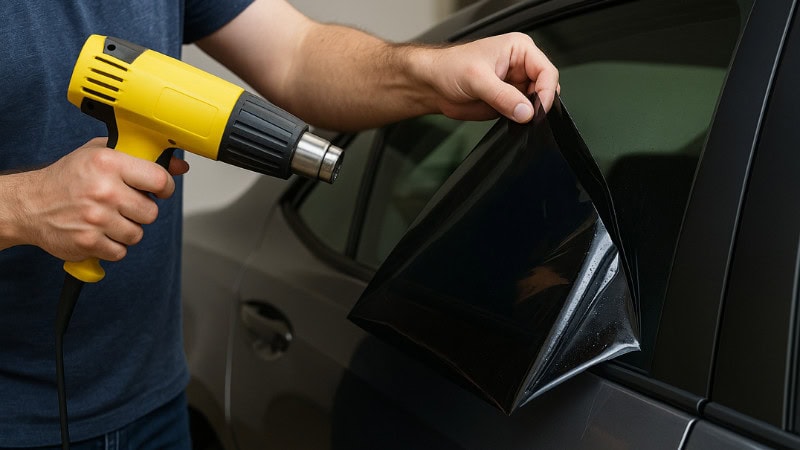
Using a heat gun is the preferred method for most DIYers because it softens the adhesive, allowing the film to peel off in large pieces. To begin, plug in the heat gun and set it to medium. Allow the tool to fully heat up. Hold it a few inches from the glass, and point it at a corner of the window for 20–30 seconds. Once the corner is heated, gently lift it with a plastic razor. As you slowly peel back the film, keep the heat gun moving along the area you are working so the adhesive stays warm, making the film easier to remove.
Hold the heat gun a few inches from the glass and heat one corner for 20–30 seconds. Once the adhesive softens, lift the corner of the tint with a plastic razor. While you peel, move the heat gun over the area you’re working. This keeps the adhesive warm and allows smooth removal.
If the film tears, just reheat that section and keep peeling slowly. After all film is removed, reheat any stubborn adhesive spots, apply adhesive remover, and clean the window with glass cleaner.
This method works well for most side windows, but be gentle around rear defroster lines. For safer options on the rear window, consider the steam method next.
Method 2: Remove Window Film Using Steam (Safest for Rear Glass)
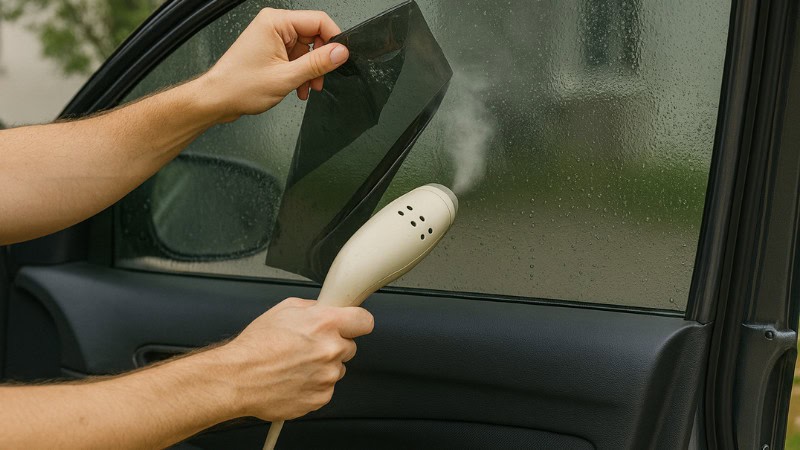
A steamer is one of the safest and most effective ways to remove window tint, especially on the rear windshield, where defroster lines are sensitive. Unlike direct heat from a gun, steam evenly warms both the film and the adhesive, reducing the risk of damaging the electrical grid on the glass.
Fill a clothing or portable steamer with water and allow it to heat up fully. Hold the steamer close to the window and steam along the edges of the tint for 1–2 minutes. When the adhesive softens, lift a corner using a plastic scraper or fingernail.
As you peel the tint, keep the area you’re working on steamed. This keeps the adhesive soft and helps the film come off in a single piece. If it tears, reapply steam and continue carefully.
Once the film is off, spray the glass with adhesive remover and wipe away any sticky residue. Follow up with a good glass cleaner to restore clarity.
Steam is highly recommended for newer cars since it minimizes risk and delivers factory-clean results. If steam isn’t an option, the trash bag method is another effective choice, especially in warm climates.
Method 3: The Trash Bag + Sunlight Method (Great for Hot States)
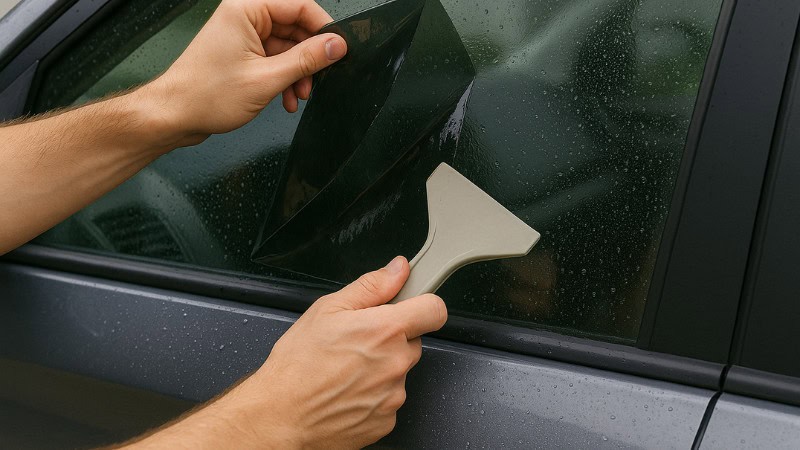
If you live in a warm climate or have plenty of sunshine, the trash bag method is one of the easiest and most budget-friendly ways to remove old window tint. Heat from the sun naturally softens the adhesive, allowing the film to peel away with minimal effort or tools.
To use the trash bag and sunlight method, first spray soapy water or a mixture of water and ammonia (use ammonia only with good ventilation) onto the inside of the tinted window. Quickly cover the wet window with a black trash bag, pressing it firmly against the tint. Park the car in direct sunlight for 20–30 minutes. The sun’s heat, absorbed by the black bag, will soften the adhesive beneath.
Once the tint feels warm and soft, lift a corner and slowly pull it back. If adhesive remains or tint sticks, spray more solution and let the area heat up again before continuing.
After all the tint is removed, clean the window with adhesive remover, then finish with a streak-free glass cleaner. Once your tint is off, stubborn adhesive may remain—here’s how to tackle it safely.
How to Remove Stubborn Adhesive Without Scratching Glass
After removing the window film, the leftover adhesive is usually the toughest part. Using the wrong tools or rushing can scratch the glass or damage rear defroster lines, so use patience and the proper products.
First, apply a citrus-based adhesive remover, rubbing alcohol, or tint-safe glue dissolver directly onto sticky areas. Let the remover sit for about a minute to break down the adhesive. Use a plastic razor or scraper to gently push and lift the softened glue from the glass. Always avoid metal blades, especially on the rear window, to prevent cutting defroster lines.
If the glue is thick or dried out, warm it with a heat gun or steamer to loosen it. Heat softens the adhesive, making scraping much easier. For extremely stubborn patches, reapply adhesive remover and repeat the process until the surface is clean.
When the glue is gone, spray the window with glass cleaner and wipe it down with a microfiber towel. This removes leftover chemicals and restores crystal-clear visibility. Cleaning thoroughly also helps prepare the glass for a new tint if you’re planning to install fresh film.
Taking your time at this stage helps avoid scratches or damage to the window. Next, let’s focus on safety tips to ensure every step of the tint removal stays accident-free.
Safety Tips to Avoid Damage
Removing window film isn’t difficult, but doing it the wrong way can quickly lead to broken glass, scratched windows, or damaged defroster lines. The most important rule is never to scrape aggressively, especially while the glass is hot. Sudden temperature changes or too much pressure can weaken the window.
Avoid using metal razor blades on any window. They may seem effective, but one wrong angle can scrape the glass or cut through the rear defroster grid, leading to an expensive repair. Stick to plastic scrapers and take your time.
When using adhesive removers, always ventilate the car. Many chemicals contain strong fumes that build up inside a closed vehicle. Wearing gloves and eye protection is also important, especially when using ammonia-based cleaners or heat tools.
Cover interior panels with a towel when working nearby to stop chemical drips from discoloring surfaces. If the tint feels stuck, apply more heat or steam and try again—do not force it.
By following these safety steps, you ensure clean results without unnecessary damage. If you’re considering professional help, the next section examines costs and considerations.
How Much Does It Cost to Remove Window Film Professionally?
If you don’t want to deal with peeling, steaming, or scraping, a professional tint shop can remove your old film for you. In most parts of the U.S., the cost depends on the vehicle’s size and the strength of the tint adhesive. On average, expect to pay $50–$150 per window, or around $150–$300 for the entire car.
Cars with badly bubbled or purple-tinted film may cost more because the film usually comes off in small pieces, requiring extra labor. Rear windshields can also be pricier since techs must protect the defroster lines and work more carefully.
While DIY works for most people, paying a shop can save time and reduce the risk of damaging the rear glass. It’s a good option if your tint is decades old or extremely deteriorated.
Common Mistakes People Make
Removing old window tint may seem simple, but a few mistakes can make it frustrating. One of the biggest issues is peeling the film too fast, which can leave more adhesive behind and double the work.
Another mistake is using metal blades on glass, especially on the rear window. They can scratch the surface or damage the defroster lines. Some DIYers also use harsh chemicals that may harm interior trim or produce strong fumes.
Skipping the heating step is another problem. Trying to remove cold tint almost always leads to tearing and stubborn glue. Patience and warm adhesive make the process much cleaner.
Finally, many people peel off the tint but forget to clean the leftover glue completely. This leads to streaks, haze, and poor visibility—especially at night.
Avoiding these mistakes ensures your tint removal goes smoothly and keeps your car’s glass in perfect shape.
Cleaning & Final Glass Prep
Once all the tint and adhesive are removed, giving the glass a proper final cleaning is essential—especially if you’re planning to install new window film. Start by spraying the window with a quality glass cleaner, then wipe it with a microfiber towel. This removes residual chemicals and prevents streaks.
Next, inspect the glass closely in bright light. If you see any sticky spots or haze, apply a bit more adhesive remover, then gently scrub with a microfiber cloth or a plastic scraper. The goal is to leave the surface perfectly smooth.
Finish by wiping the window dry with a clean towel. If you plan to retint, avoid touching the glass with your fingers to prevent oils from affecting adhesion.
A clean, residue-free surface ensures clear visibility and delivers a professional-quality finish for your next tint job.
FAQs
1. How long does window tint removal take?
The time required to remove window tint depends on the method used and the condition of the film. A heat gun or steamer method usually takes 20–40 minutes per window, while the trash-bag sunlight method may take longer, depending on the weather. Older tint that’s bubbling or turning purple often comes off in smaller pieces, which adds time. Removing adhesive afterward can take an additional 10–20 minutes. In general, expect 1 to 2 hours to complete all windows on a typical sedan if you work carefully. Professional shops may finish faster due to experience and tools.
2. Will removing tint damage my rear defroster lines?
It can, but only if you use the wrong tools or apply too much force. The rear window’s defroster lines sit on the surface of the glass, so scraping aggressively—especially with a metal blade—can cut or weaken them. The safest approach is to use steam, which gently softens the adhesive without overheating or scratching the glass. As long as you peel slowly and avoid harsh scraping, the defroster lines remain intact. If a section feels stubborn, add more steam or more adhesive remover rather than forcing it. Proper technique protects the defroster and keeps the rear windshield functioning.
3. Can I remove tint without using heat?
Yes, but it’s usually much harder and messier. Tint adhesive is designed to withstand sunlight and temperature changes, so removing it cold often leads to tearing, tiny pieces, and a lot more cleanup. If you want to avoid heat tools, the best non-heat method is using soapy water and ammonia, combined with the trash-bag technique in direct sunlight. The sun naturally warms the adhesive, making it easier to peel. Technically, you can scrape tint off without heat, but it’s not recommended—it takes longer, increases the risk of scratches, and leaves more glue behind.
4. Does WD-40 remove tint glue?
WD-40 can soften some adhesive residue, but it’s not the best or cleanest option for tint removal. It works in a pinch for small spots, but it leaves behind an oily film that requires extra cleaning. A citrus-based adhesive remover, rubbing alcohol, or a dedicated tint-glue dissolver works faster and wipes off cleaner. If you do use WD-40, spray a small amount on a microfiber cloth, let it sit for a minute, and wipe gently. Avoid overspray near fabric, door panels, or electronics because WD-40 can stain. It’s okay as a backup, but not the ideal solution.
5. Is ammonia safe for removing window tint?
Ammonia works well for breaking down tint adhesive, but it must be used carefully. It should never be used in a closed car without airflow, as the fumes are strong. You also shouldn’t use ammonia near aftermarket interior pieces or on certain plastics, as it can discolor them. When used outdoors with good ventilation, ammonia is effective—especially when paired with the trash-bag sunlight method. Just spray it on the tint, cover with a black bag, and let the heat activate it. Always wear gloves and avoid ammonia on factory navigation screens or sensitive electronics.
6. Should I remove the tint before selling my car?
It depends on the condition of the tint and local laws. If your tint is bubbling, purple, peeling, or too dark to pass inspection, removing it can make the car look newer and more appealing to buyers. Many shoppers prefer clear windows over old, faded tint because it suggests better maintenance. On the other hand, if your tint is in good shape and legal, there’s no need to remove it—many buyers consider tint a bonus. If you’re unsure, compare similar listings in your area to see whether clean glass or tinted windows attract better offers.
Final Thoughts
Removing old window film doesn’t have to be frustrating or expensive when you follow the right steps. Whether you use a heat gun, steamer, or the sunlight trash-bag method, the key is patience—soft adhesive always peels cleaner and protects your glass. Take your time, avoid metal scrapers, and keep safety in mind, especially around rear defroster lines.
A proper cleanup afterward ensures streak-free visibility and creates a smooth surface if you plan to install new tint. With the right tools and steady technique, you can achieve professional-level results at home and restore your windows to a clean, clear finish.